
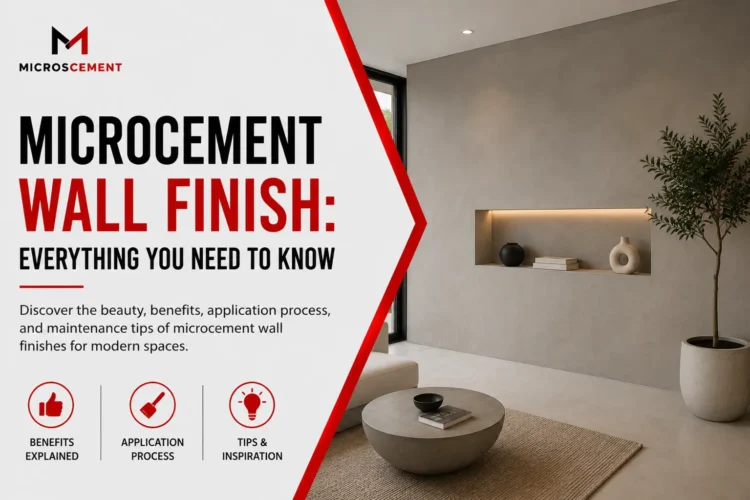
A microcement wall finish creates a thin, seamless, concrete-style surface without the grout lines found in tile. In Dallas, it is increasingly used for feature walls, bathrooms, showers, kitchen backsplashes, and modern living spaces. For 2026 budgeting, professionally installed microcement walls in Dallas commonly run about $18 to $36 per square foot, depending largely on the condition and type of substrate.
Microcement can be customized with warm beige, white, gray, charcoal, black, and other colors. Texture can range from smooth and subtle to more visibly hand-troweled. This guide covers costs, finish types, colors, installation, benefits, and design ideas for Dallas homeowners.
What Is a Microcement Wall Finish?
A microcement wall finish is a thin decorative coating made to create a continuous cement-style surface over a stable wall substrate. Instead of installing individual tiles or thick concrete panels, installers apply the system in thin layers and protect the finished surface with a suitable sealer.
If you are new to the material, understanding what microcement is can make it easier to compare it with tile, paint, plaster, and traditional concrete finishes.
Terms such as micro cement, micro concrete, microcement plaster, microcrete, micro cement plaster, and micro cement finish may describe similar decorative surfaces, although product formulations and installation systems differ between manufacturers.
The main visual advantage is continuity. A micro cement wall does not need the repeated grout joints associated with tile, so it can give a bathroom, kitchen, or living room a cleaner appearance.
How Much Does a Microcement Wall Finish Cost in Dallas?
Microcement wall installation in Dallas typically costs about $18 to $36 per square foot based on current published 2026 local pricing. The final price depends on substrate condition, preparation, wall details, system specification, and finish complexity.
A useful Dallas budgeting guide is:
| Wall condition | Approximate installed cost |
| Sound, simple substrate | $18–$22/sq. ft. |
| Standard preparation | $23–$28/sq. ft. |
| Complex/full-build substrate | $29–$36/sq. ft. |
These ranges should be used for planning rather than treated as fixed quotes. Small walls, shower niches, corners, damaged surfaces, custom textures, and extensive preparation can change the final price.
Homeowners comparing wall and floor projects can also review the 2026 microcement flooring cost in Dallas to understand how surface type affects overall pricing.
What Affects Microcement Wall Cost?
The existing wall condition is one of the biggest factors affecting microcement cost because the finished coating depends on a stable, properly prepared substrate.
A smooth, sound wall requires less work. Cracks, damaged drywall, loose tile, uneven plaster, moisture issues, or unstable surfaces may require additional preparation.
Major cost factors include:
- Total wall area
- Existing wall material
- Crack and surface repairs
- Tile preparation
- Reinforcement requirements
- Primer and base system
- Number of corners and edges
- Custom colors or textures
- Waterproofing in wet areas
- Sealer specification
- Installer experience
Complex shower walls generally require more work than a simple bedroom feature wall.
What Types of Microcement Wall Finishes Are Available?
Microcement can create smooth, textured, matte, natural, or more dramatic decorative wall finishes. Because it is hand-applied, subtle variation is part of its appearance.
Smooth Microcement Finish
A smooth finish creates a clean and refined surface. It works well with minimalist interiors, contemporary bathrooms, and modern kitchens.
The surface is seamless, but it should not look exactly like factory-produced tile. Small tonal changes can give the wall depth and character.
Textured Microcement Finish
A textured finish makes the hand-applied movement more visible. The installer can control the microcement texture through trowel technique and product selection.
This style works particularly well for feature walls and spaces where the wall itself is intended to become a design element.
Concrete-Look Finish
A concrete-look microcement wall provides the appearance of concrete without constructing a thick micro concrete wall.
For homeowners who want to continue the same style onto horizontal surfaces, micro concrete flooring can create visual continuity between walls and floors.
Seamless Microcement Finish
A seamless finish creates broad visual continuity without conventional tile grout lines. It can be particularly effective when the same material moves across adjacent walls.
Decorative concrete includes many techniques for changing the appearance of cement-based surfaces. The broader concept is explained in Wikipedia’s guide to decorative concrete.
What Are the Best Microcement Wall Colors?
Warm neutrals, soft whites, beige, gray, and charcoal are among the most versatile microcement wall colors because they pair easily with wood, stone, metal, and modern fixtures.
The best color depends on the room’s natural light, flooring, cabinetry, and overall design.
White Microcement
White microcement can make smaller spaces feel brighter and cleaner. It works especially well in modern bathrooms and kitchens.
A white microcement bathroom can also pair well with natural wood vanities, brushed metal fixtures, and warm lighting.
Beige and Warm Neutral Microcement
Beige, sand, taupe, and warm gray create a softer alternative to industrial concrete gray.
These colors suit Dallas homes that combine modern architecture with warmer interior materials such as oak, walnut, limestone, or brass.
Gray Microcement
Gray remains one of the most recognizable choices for a micro cement wall finish.
Light gray creates a softer concrete appearance, while deeper gray can make a feature wall more dramatic.
Black and Charcoal Microcement
A black microcement wall can become a strong focal point in a living room, bathroom, fireplace area, or commercial interior.
Dark finishes work best when lighting and surrounding materials prevent the space from feeling too heavy.
Can Microcement Be Applied Over Wall Tiles?
Yes, microcement can often be applied over existing wall tiles when they are firmly bonded and the surface is prepared correctly.
The tile surface must first be inspected. Loose tiles, movement, damaged grout, or moisture problems should be addressed before applying the new system.
Proper microcement wall prep over tile can involve cleaning, mechanical preparation, filling joints, priming, reinforcement where needed, and building a stable surface for the finish coats.
Covering existing tile can be useful during renovation because it may reduce demolition. However, applying microcement over unstable tile does not fix the underlying problem.
How Is Microcement Installed on Walls?
Professional microcement wall installation uses a controlled multi-stage process to create adhesion, visual consistency, and surface protection.
A typical process includes:
- Inspect the wall. Check cracks, movement, moisture, tile adhesion, and surface condition.
- Repair the substrate. Correct damaged or unstable areas.
- Prepare the surface. Clean and level the wall as required.
- Apply microcement primer. The correct primer creates a suitable bonding surface.
- Add reinforcement if needed. Certain substrates require additional stabilization.
- Apply the microcement system. Thin layers create the color and texture.
- Sand as required. Sanding refines the appearance between stages.
- Apply the sealer. The correct microcement sealer protects the finished surface.
The exact system varies by manufacturer and substrate. Following a complete microcement installation process is more important than simply applying a decorative coating to the wall.
Can Microcement Be Used on Bathroom and Shower Walls?
Yes, microcement can be used on bathroom and shower walls when the complete wet-area system includes proper preparation, waterproofing, and sealing.
A microcement bathroom can use the material across walls, floors, vanity surfaces, and selected shower areas to create a continuous design.
For showers, decorative microcement should not be treated as a substitute for every layer behind the visible surface. Waterproofing requirements must be addressed as part of the complete installation system.
Homeowners planning a remodel can explore microcement bathroom ideas before selecting colors and surface combinations.
Dallas bathroom pricing also shows why wet areas need separate budgeting. Current local 2026 estimates place many complete microcement bathroom projects around $2,500 to $6,500, depending on size, substrate, shower scope, and system requirements.
What Are the Benefits of Microcement Walls?
Microcement walls combine a seamless appearance with broad design flexibility and the ability to cover several stable existing substrates.
Key advantages include:
- No conventional tile grout lines
- Thin application
- Wide range of colors
- Custom hand-applied texture
- Modern concrete appearance
- Suitable for feature walls
- Can be used in bathrooms with the correct system
- Can often be applied over existing tile
- Works with floors, counters, and backsplashes
- Creates visual continuity between surfaces
A micro cement bathroom is a good example of how the same design language can continue across several surfaces.
What Microcement Wall Problems Should You Avoid?
Most microcement wall problems are linked to poor substrate preparation, movement, moisture, unsuitable products, or incorrect application rather than appearance alone.
Common mistakes include applying microcement over loose tiles, ignoring cracks, rushing drying stages, using the wrong primer, and selecting an unsuitable sealer.
Published technical guidance also emphasizes substrate condition because damaged or uneven bases can require additional repairs, reinforcement, leveling, or waterproofing before installation.
A wall should therefore be assessed before choosing a DIY microcement kit simply because the visible application looks straightforward.
How Do You Choose a Microcement Wall Finish for Your Home?
Choose the finish by considering the room, lighting, surrounding materials, maintenance needs, and how much visual texture you want.
For a calm interior, choose warm beige, off-white, or light gray with subtle trowel movement. For a stronger feature wall, charcoal or black with visible texture can create more contrast.
Request physical samples whenever possible. Screen colors can look different once the material is installed under your home’s lighting.
Homeowners researching first-hand experiences can also review relevant Quora discussions about microcement for additional questions to ask contractors. Product specifications and professional installation guidance should still be the primary basis for making technical decisions.
How Should Dallas Homeowners Choose a Microcement Installer?
Choose microcement installers based on their preparation process, product system, wet-area knowledge, portfolio, and written project scope rather than selecting the lowest quote.
Ask potential installers:
- Which microcement system do you use?
- What wall preparation is included?
- How will existing cracks be treated?
- Can you apply microcement over my existing tile?
- Is waterproofing included for shower areas?
- Which primer and sealer will be used?
- Can I review physical color samples?
- How long will installation take?
- What maintenance does the finish require?
- Is workmanship covered by a warranty?
Professional installation costs can vary substantially by system. A current U.S. 2026 guide places professionally installed microcement surfaces at approximately $30 to $75+ per square foot nationally for its system, reinforcing why homeowners should compare the actual scope and specification behind each quote rather than price alone.
Frequently Asked Questions
Is microcement good for walls?
Yes. Microcement works well on stable interior walls because it creates a thin, seamless decorative surface without traditional tile grout lines. It can be used for living-room feature walls, bathrooms, kitchen backsplashes, and other areas. The wall must be properly prepared before application for a durable result.
How much does a microcement wall finish cost in Dallas?
Microcement walls in Dallas commonly cost around $18 to $36 per square foot based on published 2026 local pricing. A sound substrate may fall near the lower end, while tile, damaged walls, difficult substrates, custom detailing, or wet-area preparation can increase the final installation cost.
Is microcement waterproof?
Microcement can be part of a water-resistant or waterproof wet-area system, but homeowners should not assume the decorative finish alone provides complete shower waterproofing. Proper substrate preparation, a suitable waterproofing system where required, and the correct sealer are critical when installing microcement in showers and other wet areas.
Can you put microcement over shower tiles?
Yes, microcement over shower tiles may be possible when the existing tiles are firmly bonded and the complete substrate is suitable. The installer must assess tile adhesion, joints, movement, moisture, and waterproofing before work begins. Covering unstable or damaged shower tiles can transfer underlying problems into the new finish.
Is microcement expensive for walls?
Microcement is generally a premium decorative wall finish because installation requires skilled hand application and multiple preparation and finishing stages. Dallas wall pricing in 2026 can range around $18 to $36 per square foot. Project size, substrate condition, waterproofing, detailing, finish complexity, and installer experience all affect the final cost.
What color microcement is best for walls?
Warm beige, off-white, light gray, and natural concrete tones are versatile choices for most walls. White can brighten smaller rooms, while charcoal or black works well for dramatic feature walls. The best color should complement the room’s flooring, cabinetry, lighting, fixtures, and other permanent finishes.
Conclusion
A microcement wall finish is a strong option for Dallas homeowners who want seamless walls with customizable color and texture. It works particularly well for modern bathrooms, showers, kitchens, feature walls, and interiors where conventional grout lines are not desired.
For 2026 planning, Dallas homeowners can expect published professional wall installation prices of roughly $18 to $36 per square foot, with the substrate and required preparation playing a major role in the final quote.
When planning a project, microscement recommends looking beyond color alone. Surface preparation, the complete microcement system, installer skill, waterproofing where required, and the final sealer all influence how the finished wall looks and performs.