

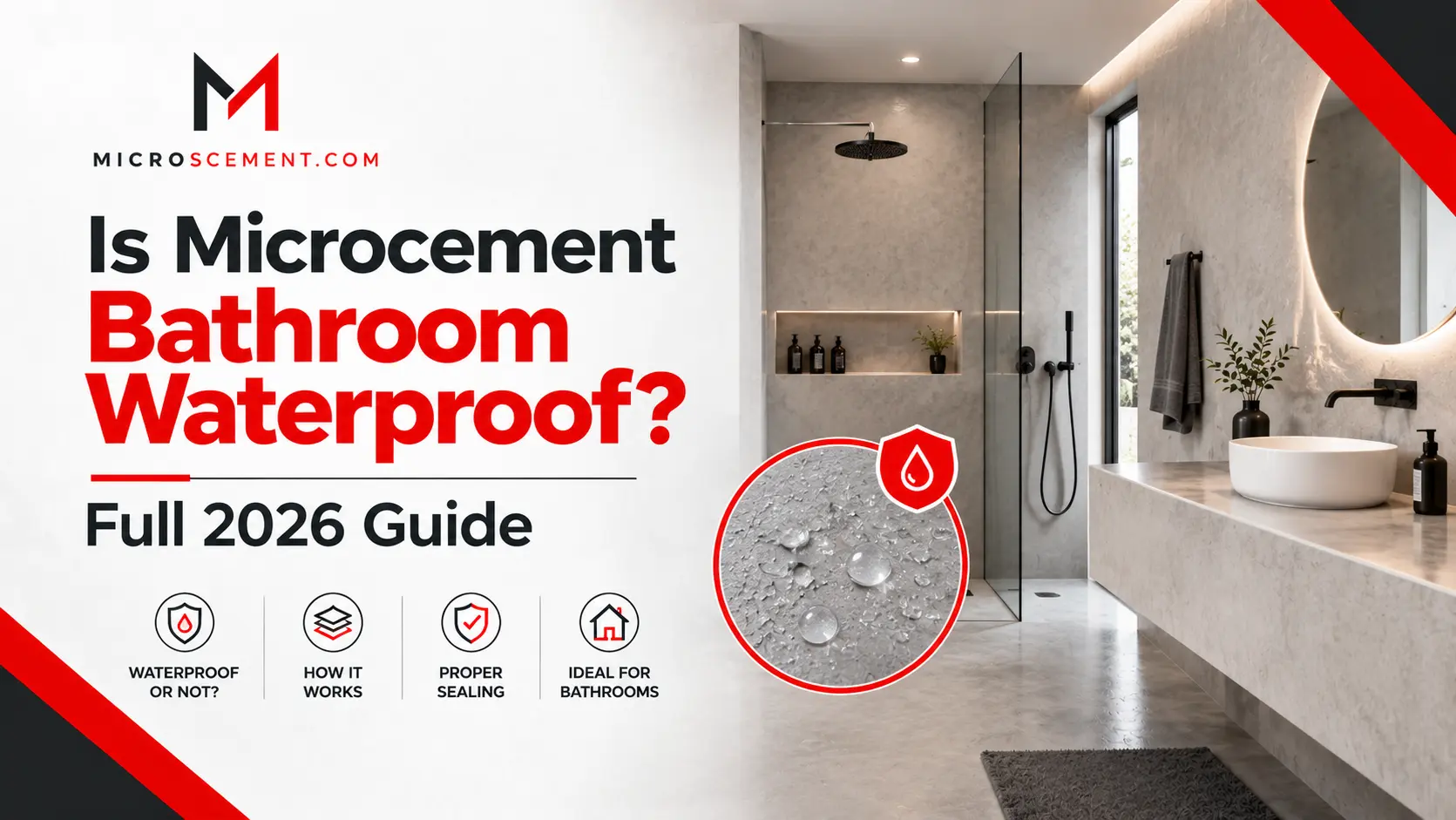
A microcement bathroom is waterproof once it is finished with a proper sealer, but the microcement layer itself is porous before that step. The sealer, not the base material alone, is what protects your floor, walls, and shower from water damage. This guide explains how that waterproofing process works, where it matters most, and what happens when a step gets skipped.
By the end, you will know exactly what makes a microcement bathroom water-resistant and how to keep it that way.
Is Microcement Truly Waterproof?
Microcement on its own is not waterproof. It is a porous, cement-based coating that can absorb water if left unsealed. What makes a microcement bathroom waterproof is the sealer applied as the final step.
This is an important distinction for anyone comparing materials. Tile is naturally water-resistant on the surface, but its grout lines are not. Microcement flips that: the surface itself needs a sealer, but once sealed, there are no grout lines left to fail. At microscement, we treat sealing as the most important step in any bathroom project, not an optional add-on.
If you want the full technical picture of the material, our what is microcement guide explains its composition before it’s sealed.
How Microcement Becomes Waterproof
Microcement becomes waterproof through a multi-step process: priming, applying two coats of microcement, then sealing with a waterproof topcoat rated for wet areas.
- Priming the surface – A bonding primer helps every later layer stick properly, including the sealer.
- Applying the base coat – This layer builds up the surface and creates the foundation for the final look.
- Applying the second coat – A thinner layer sets the final color and texture.
- Sealing the surface – A waterproof sealer, chosen specifically for wet areas, locks out moisture.
- Allowing full cure time – The sealer needs to cure completely before the bathroom sees regular water exposure.
Skipping or rushing the sealing step is the single biggest reason a microcement bathroom fails to perform as expected. Our Topciment microcement installation guide covers how each layer, including the sealer, should be applied.
Where Waterproofing Matters Most in a Bathroom
Waterproofing matters most in areas with constant water contact, like a walk in shower, bathroom floor, and tub surround. Dry areas, like an accent wall near bathroom vanities, need less intensive sealing.
Shower Walls and Floors
A shower floor and walls see the most direct, constant water exposure in any bathroom. These areas need the strongest waterproof sealer rated specifically for wet, high-contact use.
Bathroom Floors
A microcement bathroom floor deals with splashes, mopping, and humidity, even outside the shower. It still needs a solid waterproof sealer, though not always as heavy-duty as shower-specific coatings.
Dry Walls and Vanities
Walls near bathroom vanities or lighting fixtures see far less water contact. These areas can often use a lighter sealer, though local humidity in Dallas homes still calls for some level of protection.
Microcement vs. Tile: Which Handles Water Better?
Microcement and tile both handle water well when installed correctly, but they fail in different ways. Tile fails at the grout; microcement fails if the sealer is missing or worn down.
| Feature | Microcement | Tile |
| Water resistance | High, once sealed | High on tile surface, weak at grout |
| Weak point | Sealer wear over time | Grout cracking and staining |
| Maintenance | Occasional resealing | Regular grout cleaning and sealing |
| Mold risk | Low, no grout lines | Higher, especially in grout lines |
| Repair | Can be resealed or patched | Grout must be replaced periodically |
For more design comparisons between the two, our microcement bathroom ideas page shows real examples next to traditional tile layouts.
Common Waterproofing Mistakes and Problems
The most common microcement bathroom problems related to water come from skipping the sealer, using the wrong sealer type, or rushing the cure time.
- Skipping the sealer entirely – This is the fastest way to end up with water damage in a wet bathroom.
- Using an indoor sealer in a shower – Not all sealers are rated for constant water exposure. A shower needs a stronger, wet-area-specific product.
- Rushing the cure time – Using the shower before the sealer fully cures can weaken its protection.
- Ignoring small gaps in coverage – A missed spot during sealing leaves that exact area open to water absorption.
- Delaying resealing – Sealers wear down gradually. Waiting too long to reseal reopens the surface to water damage.
Microcement belongs to a broader category of cement-based coatings used across modern construction. For general background on how cement-based materials interact with moisture, Wikipedia’s page on cement offers a useful overview.
How to Maintain a Waterproof Microcement Bathroom
Maintaining a waterproof microcement bathroom means cleaning it regularly with non-abrasive products and resealing it on the schedule your installer recommends.
- Wipe down shower walls and floors after use to reduce standing water.
- Avoid harsh abrasive cleaners that can wear down the sealer faster than normal use.
- Check high-contact areas, like the shower floor, for early signs of wear.
- Reseal on the schedule recommended for your specific product, usually every one to two years in wet areas.
Our Dallas wall finish guide covers how local humidity affects maintenance timing for microcement walls specifically.
Cost of Waterproofing a Microcement Bathroom
Waterproofing cost depends on the sealer grade, the square footage of wet areas, and whether the project covers a shower, floor, or both.
| Cost Factor | How It Affects Price |
| Sealer grade | Wet-area sealers cost more than standard indoor products |
| Wet area size | Larger showers and floors need more sealer and labor time |
| Number of coats | Extra coats add durability but raise the price |
| Resealing frequency | More frequent resealing adds to long-term maintenance cost |
| Installer experience | A skilled installer costs more but reduces the risk of gaps in coverage |
For a full breakdown of bathroom project costs, our microcement bathroom design and cost guide covers pricing across floors, walls, and showers together.
Many homeowners also research real waterproofing experiences before starting a project. Forums like Quora’s home renovation section offer honest feedback from people who have lived with a sealed microcement bathroom.
How to Choose a Waterproof Microcement System
Choose a system with a sealer specifically rated for wet areas, confirm the full cure time before use, and hire an installer experienced with bathroom-specific waterproofing.
- Ask what the sealer is rated for. Confirm it is built for constant water exposure, not just general indoor use.
- Ask about cure time. A rushed cure time weakens the waterproofing before the bathroom is even used.
- Request real bathroom examples. Ask to see finished showers, not just floors from other rooms.
- Plan your resealing schedule early. Knowing this upfront avoids surprise maintenance costs later.
- Confirm coverage in tricky spots. Corners, edges, and around fixtures need careful sealer application to avoid gaps.
If you’re covering an existing tiled shower, the step-by-step process differs slightly from a bare surface. Our how to apply microcement guide walks through the full application process in detail.
Frequently Asked Questions
Is microcement waterproof in a shower?
Yes, once it is finished with a sealer rated for wet areas. The microcement layer alone is porous, so the waterproof sealer is what actually protects the shower from water damage.
Does microcement need to be sealed to be waterproof?
Yes. Without a sealer, microcement can absorb water and stain over time. The sealer is a required step, not an optional upgrade, for any bathroom application.
How long does microcement sealer last in a bathroom?
A quality sealer typically lasts one to two years in high-water areas like showers before needing to be reapplied. Dry walls and lower-contact areas may last longer between resealing.
Can water damage a microcement bathroom floor?
Yes, if the sealer is missing, worn down, or applied unevenly. A properly sealed and maintained microcement floor resists daily water exposure well for years.
Is microcement better than tile for waterproofing?
Both can perform well when installed correctly. Tile fails most often at the grout lines, while microcement fails only if the sealer wears down or was applied incorrectly, which makes upkeep more predictable.
Do I need to reseal my microcement bathroom every year?
Not always every year, but high-water areas like showers usually need resealing every one to two years. Lower-contact areas, like dry accent walls, can often go longer between resealing.
Conclusion
A microcement bathroom is waterproof, but only because of the sealer applied at the end of the process, not the base material alone. Proper installation, the right sealer, and a regular resealing schedule are what keep your bathroom protected for years.
If you’re planning a waterproof microcement bathroom, take a look at our guide on microcement bathroom durability or reach out to talk through your project and budget.
2 thoughts on “Is a Microcement Bathroom Waterproof? Complete Guide”