

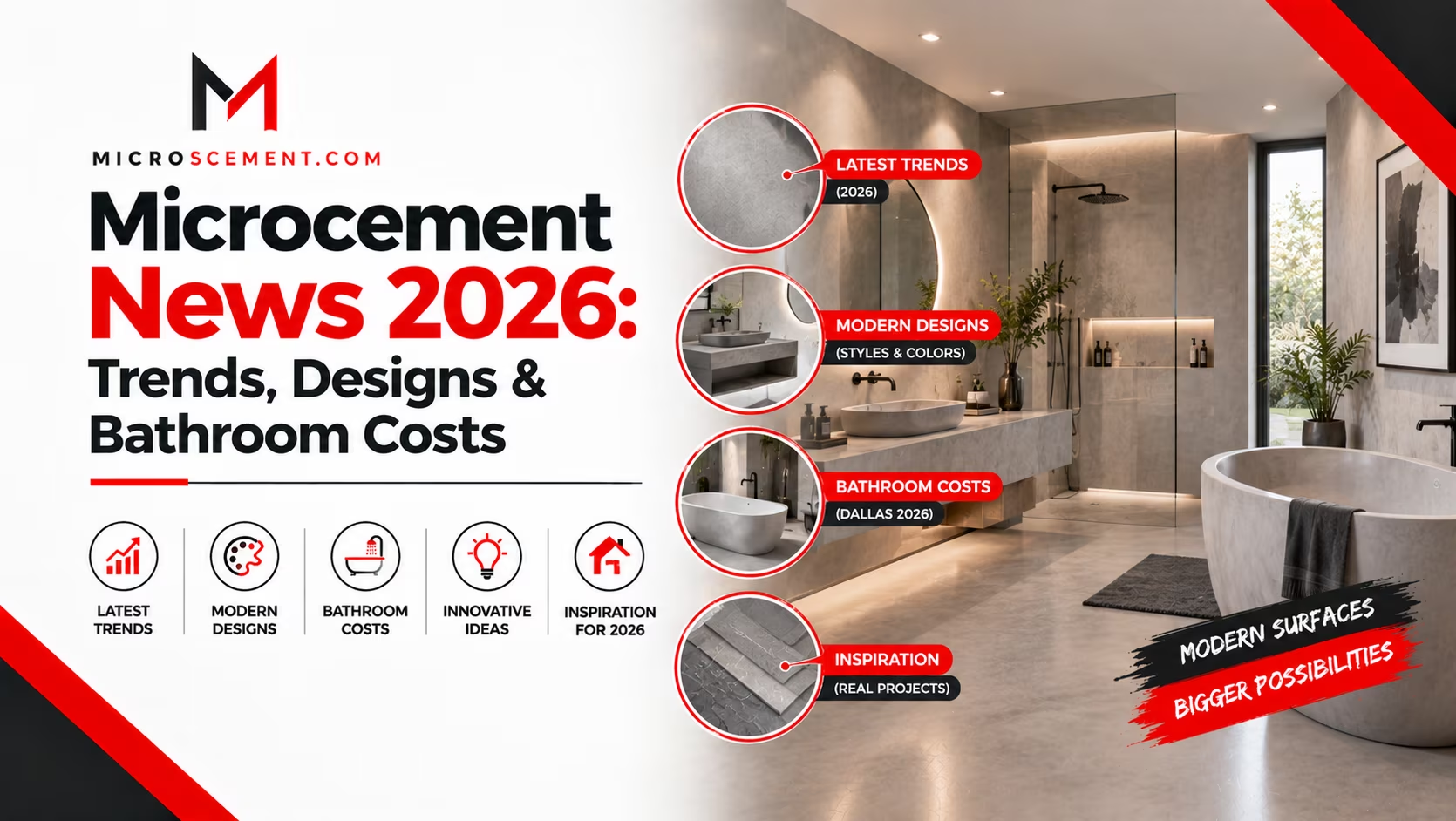
Microcement news in 2026 centers on three things: seamless grout-free bathrooms, better waterproofing systems, and clearer pricing for homeowners. Dallas and Plano homeowners are choosing microcement for showers, walls, and floors because it looks modern and cleans easily.
This guide covers what microcement is, what’s trending, what a microcement bathroom costs, and how to hire the right installer. microscement put it together for North Texas homeowners.
What Is Microcement?
Microcement is a thin decorative coating made from cement, polymers, and minerals. It creates seamless surfaces on floors, walls, showers, and furniture.
Installers apply it in thin layers, usually 2 to 3 mm in total. Because it is so thin, it can often go over existing tile. You can read the full breakdown in our guide to what microcement is.
Related terms include micro concrete, decorative coating, and seamless flooring. They describe similar concrete-look finishes.
What Are the Biggest Microcement Trends in 2026?
The biggest 2026 trend is the grout-free wet room. Homeowners want one continuous surface from floor to wall to shower.
Here is what’s shaping designs this year:
- Walk-in showers with linear drains. One sloped surface replaces tile and grout.
- Warm, earthy colors. Sand, clay, and soft greige are replacing cold gray.
- Matte and lightly textured finishes. They hide water spots and add grip.
- Integrated fixtures. Basins, vanities, shower niches, and benches use the same finish as the walls.
- Minimalist, spa-style rooms. Fewer materials make small bathrooms feel larger.
For design inspiration, see our microcement bathroom ideas.
What Industry Updates Matter This Year?
The key update is that quality now depends on the full system, not just the top coat. A good system includes primer, fiberglass mesh, base coat, finish coat, and a polyurethane protective sealer.
Wet areas need one more layer: a waterproofing membrane or tanking system under the microcement. Skipping it is the most common reason showers fail.
Established manufacturers such as Topciment, Smartcret, and CEMHER offer complete systems built for wet areas. microscement installs Topciment systems across the Dallas–Plano area. Always ask any installer which system they use and what warranty comes with it.
Is Microcement Waterproof?
Microcement itself is water-resistant, not fully waterproof. The sealer and the membrane underneath make the shower watertight.
Water-resistant means the coating resists moisture. Waterproof means a membrane stops water from reaching the substrate. A proper shower needs both.
Read more in our guide on whether a microcement bathroom is waterproof. For background on how waterproofing works in general, see Wikipedia’s waterproofing overview.
How Much Does a Microcement Bathroom Cost?
Most U.S. homeowners should plan on roughly $15 to $40 per square foot installed, or about $160 to $430 per square metre. Showers and wet rooms sit at the high end. These are planning ballparks. Your real price depends on your bathroom, so request a written quote.
Quick reference for typical bathroom jobs:
| Project | What affects the price | Typical position in range |
| Walls only | Size, edges, niches | Low to mid |
| Bathroom flooring | Slope, levelling, slip-resistant sealer | Mid |
| Walk-in shower or wet room | Tanking, drain, extra coats | High |
| Vanity, countertop, or basin | Custom shaping, small surface area | High per square foot |
| Over existing tile | Skipping demolition, grout-line prep | Often lower overall |
What Affects Microcement Bathroom Pricing?
Surface preparation, waterproofing, and bathroom size drive most of the price. Labour is the biggest part of the bill because every coat needs drying and sanding time.
Key cost factors:
- Substrate condition. Cracked or uneven surfaces need repair and floor levelling compound.
- Waterproofing. Tanking systems add material and labour cost.
- Size. Small bathrooms cost more per square foot because setup time stays the same.
- Detail. Niches, benches, and curved shapes take longer.
- Finish. Custom colors and textures raise the price.
Our Dallas microcement flooring cost guide shows how local pricing breaks down.
Is Microcement Cheaper Than Tile?
Microcement can cost less than tile when you apply it over existing tile. It can cost more than basic ceramic tile in a simple bathroom. It is usually closer to, or below, premium porcelain and natural stone once labour is included.
Tile also needs grout maintenance. Microcement does not have grout lines. The microcement over tile installation guide explains how installers handle the joints.
What About Long-Term Costs?
Maintenance cost is low, but resealing is part of ownership. Plan to refresh the protective sealer every few years in a shower. Clean with a pH-neutral cleaner, not harsh acids.
If a chip or crack appears, a professional can usually patch it without replacing the whole surface. See our notes on microcement bathroom durability.
What Are the Benefits of Microcement in a Bathroom?
The main benefits are a seamless look, easy cleaning, and design flexibility.
- Fewer grout lines mean less mould and scrubbing.
- One material works on walls, floors, and fixtures.
- Thin layers add almost no height or weight.
- Colors and textures can be customized.
- Many projects avoid tile removal, which saves time and mess.
What Are Common Microcement Bathroom Mistakes?
The most common mistakes are skipping waterproofing, rushing cure times, and hiring untrained installers.
Avoid these problems:
- No tanking in the shower. Water reaches the substrate and the finish fails.
- Cheap sealer. It yellows, peels, or stains.
- DIY on a wet area. Mixing, troweling, and sealing take training.
- Ignoring cracks. Substrates that move need crack reinforcement.
- Using the shower too soon. Curing time matters.
Some homeowners compare notes and real-world experiences in Quora’s microcement bathroom discussions. Treat those as opinions, and confirm details with a licensed installer.
How Do You Choose the Right Microcement Installer in Dallas and Plano?
Choose an installer who uses a named, tested system, shows past bathroom projects, and gives a written quote. North Texas homes bring special concerns. Slab foundations can shift, and hot, humid summers affect drying time.
Use this checklist:
- Ask which brand and system they use.
- Request photos of finished showers, not just floors.
- Confirm they install a waterproofing membrane.
- Get an itemized quote with materials and labour separated.
- Ask about warranty and aftercare.
You can see local work in our microcement over tile before-and-after gallery for Dallas.
Frequently Asked Questions
How much does a microcement bathroom cost?
A microcement bathroom typically costs about $15 to $40 per square foot installed in the U.S. Walk-in showers cost the most because they need waterproofing. Bathroom size, surface condition, and finish choice change the final price. A written quote gives the most accurate number.
Is microcement cheaper than tiles?
Microcement can be cheaper than tile when installed over existing tile, because you skip demolition. In a simple bathroom, basic ceramic tile may cost less upfront. Microcement saves money over time through easier cleaning and no grout maintenance.
Can you microcement over bathroom tiles?
Yes, in most cases. Installers fill the grout lines, prime the surface, and apply mesh and base coats. The tile must be sound and firmly bonded. Loose or cracked tile should be repaired first.
Is microcement good for a shower?
Yes, when installed with a waterproofing membrane and a quality polyurethane sealer. Without these layers, water can damage the substrate. Professional installation and regular resealing keep a microcement shower performing well.
How long does a microcement bathroom last?
A well-installed microcement bathroom can last many years with proper care. Lifespan depends on the system used, the waterproofing, and how often you reseal. Avoid harsh cleaners and fix small chips early.
Does microcement need a lot of maintenance?
No. Daily cleaning takes a soft cloth and pH-neutral cleaner. The main task is resealing the surface every few years, especially in showers. Maintenance cost is typically lower than regrouting tile.
Conclusion
Microcement is a smart 2026 choice for a modern, grout-free bathroom, as long as the waterproofing and installation are done right. Costs vary by size and prep, so compare itemized quotes, not just totals.
Ready to plan your project? Visit microscement to request a quote for your Dallas or Plano bathroom.