

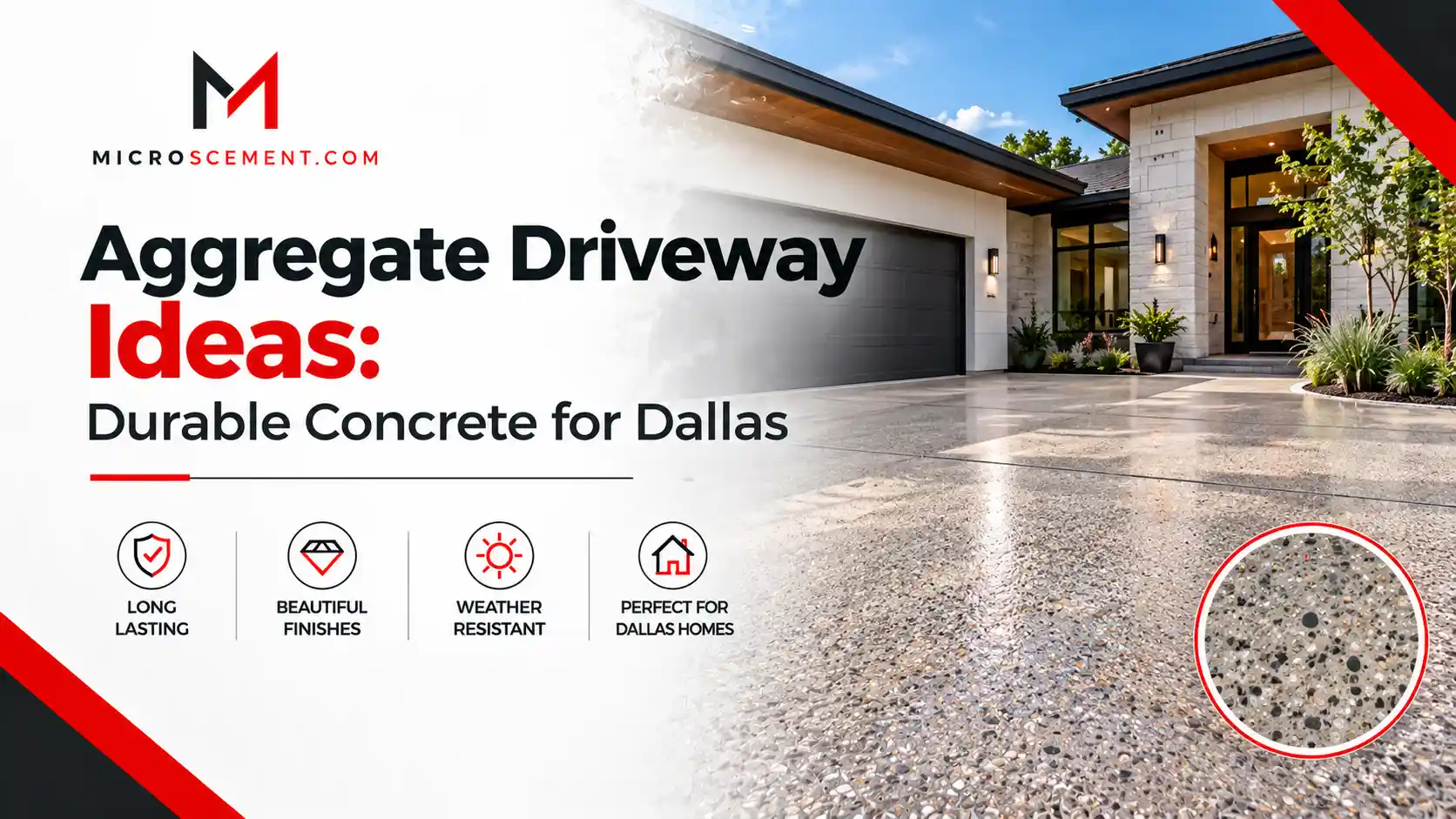
An aggregate driveway is a concrete driveway with the top layer removed to show the stones inside. It gives you a textured, slip-resistant surface that hides stains and handles Texas heat well. This guide covers styles, costs, sealing, repair, and how to choose the right option for your Dallas or Plano home in 2026.
What Is an Aggregate Driveway?
An aggregate driveway is a concrete slab where small stones, pebbles, or crushed rock are exposed on the surface. Installers pour concrete, then remove the thin cement film on top to expose the aggregate.
You will also see it called an exposed aggregate concrete driveway. The stones can be granite, quartz, river rock, or other natural stone. The mix decides the color and look.
Many homeowners also use the same finish on patios, walkways, and pool decks. For a deeper look at pricing, read exposed aggregate concrete cost.
Why Does an Aggregate Driveway Matter in Dallas?
Exposed aggregate finishes handle North Texas weather better than many smooth surfaces. Summer heat, sudden storms, and clay soil movement all stress concrete surfaces.
The textured surface gives tires and shoes better grip when it rains. The stones also hide oil drips, tire marks, and dust. That means less scrubbing and a cleaner look between washes.
This finish is also cost effective over the long term. It needs fewer cosmetic repairs than many painted or stained slabs.
How Does an Exposed Aggregate Driveway Work?
Exposed aggregate works by removing the cement paste from the top layer so the stones show. Here is the basic process:
- Prepare the base material. Crews compact the soil and add a stable gravel base.
- Set the forms and reinforcement. Steel or fiber reinforcement helps control cracking.
- Pour the concrete. The mix includes chosen stones and can be integrally colored.
- Level and float the surface. Crews smooth the slab and let it firm up.
- Expose the aggregate. Crews use a retarder and wash, or a light surface grind, to expose the aggregate.
- Cure and seal. A quality sealer locks in color and protects the stones.
Timing matters most in step five. If crews wash too early, stones pop out. If they wait too long, the surface will not reveal evenly.
What Is a Driveway With Aggregate Base?
A driveway with aggregate base is different. The aggregate sits under the concrete, not on top. It is compacted crushed stone that supports the slab and drains water away.
A driveway with big aggregate base uses larger stones for heavy loads or poor drainage. A driveway with a wet aggregate base is a warning sign. A soggy base can cause settling and cracks, so crews should let it drain before pouring.
Benefits of an Aggregate Concrete Driveway
The main benefits are durability, grip, and style. Here is what you get:
- Long life. With proper care, exposed aggregate can last 30 years or more.
- Slip resistance. Textured surfaces help in rain and around pool decks.
- Low maintenance. A pressure washer and periodic sealing are usually enough.
- Custom looks. Stone choice and integrally colored mixes complement your home.
- Stain hiding. The busy pattern masks dirt and small marks.
Aggregate Driveway vs. Other Decorative Concrete
Exposed aggregate is grippy and natural looking, while stamped concrete is patterned and smooth by comparison. Here is how they compare:
| Feature | Exposed Aggregate | Stamped Concrete | Plain Broom Finish |
| Look | Natural stone texture | Patterns like brick or slate | Simple, basic |
| Slip resistance | High | Medium | Medium |
| Maintenance | Low to medium | Medium (color can fade) | Low |
| Cost level | Mid-range | Mid to high | Lowest |
| Best for | Driveways, patios, pool decks | Patios, entryways | Utility areas |
Exposed aggregate is a strong all-around pick for driveways. Stamped concrete works better where you want a specific pattern.
Common Problems and Mistakes
Most aggregate driveway problems come from poor prep, bad timing, or skipped sealing. Watch for these:
- Weak base. A thin or wet base leads to cracks and sinking.
- Uneven exposure. Poor timing leaves patchy stones.
- Loose stones. Weak mixes or over-washing can pop stones out.
- No sealer. Unsealed surfaces stain and fade faster.
- Harsh pressure washing. Too much force can loosen stones.
Dallas clay soil makes base prep even more important. Expansion joints also matter, because heat makes concrete grow and shrink.
How Do You Repair an Aggregate Driveway?
Aggregate driveway repair starts with cleaning and diagnosing the damage. Small cracks can be filled with a flexible concrete filler. Loose stones can be re-glued with epoxy. Larger damage may need a resurfacing overlay.
Deep cracks or sinking usually mean a base problem. Those need a professional look before you patch anything. For a broader view of concrete-style surface repair, see microscement’s guide.
Sealing and Maintenance Tips
An aggregate driveway sealer protects against water, oil, and UV fading. Most homeowners reseal every two to three years, depending on sun and traffic. Follow the sealer maker’s directions.
For daily care, follow these steps:
- Sweep away leaves and debris.
- Wash with a pressure washer on a moderate setting.
- Treat oil spots quickly.
- Avoid harsh de-icing chemicals in cold snaps.
According to Wikipedia’s overview of construction aggregate, aggregate is a core ingredient in concrete, which explains why stone quality affects strength and appearance.
Cost Factors for Aggregate Driveways
Price depends on size, stone choice, base prep, and finish. Larger driveways cost more overall but often less per square foot. Colored mixes, decorative borders, and premium stone raise the price.
Site conditions matter too. Removing old concrete, fixing drainage, or adding a stronger base adds cost. Always ask for a written quote that lists each item. For a detailed breakdown, visit microscement’s cost guide for Dallas floors.
How to Choose the Right Aggregate Driveway
Pick a driveway based on your home style, budget, and climate needs. Use this quick checklist:
- Match your home. Choose stone colors that complement your brick or siding.
- Ask about the base. Confirm compaction, thickness, and drainage plans.
- Check the crew. Look for photos of finished exposed aggregate driveways.
- Confirm sealing. Ask which sealer they use and how often to reapply.
- Plan for heat. Lighter stones stay cooler under Texas sun.
Not sure about the process? Homeowners on Quora discuss exposed aggregate concrete driveways and share real experiences. Use those threads as a starting point, then confirm details with a local pro.
For interior surfaces that match your outdoor finish, microscement also covers seamless decorative options. Learn more about microcement flooring.
Frequently Asked Questions
How long does an exposed aggregate driveway last?
An exposed aggregate driveway can last 30 years or more with good installation and care. A strong base, proper curing, and regular sealing matter most. Dallas heat and soil movement can shorten its life if the base is weak.
Is an aggregate driveway cheaper than stamped concrete?
Exposed aggregate is often similar to or lower in cost than stamped concrete. Final price depends on stone type, color, and driveway size. Ask for itemized quotes so you can compare both options fairly.
How often should I seal an aggregate driveway?
Most aggregate driveways need sealing every two to three years. Heavy sun, oil, and traffic can shorten that time. A good aggregate driveway sealer protects color, blocks stains, and keeps stones locked in place.
Can I pressure wash an aggregate driveway?
Yes, you can pressure wash an aggregate driveway. Use a moderate setting and keep the nozzle moving. Too much force can loosen stones. Wash once or twice a year to remove dirt and algae.
Is exposed aggregate slippery when wet?
No, exposed aggregate is one of the more slip-resistant concrete finishes. The textured surface gives grip for shoes and tires. That is why many homeowners use it on pool decks and walkways.
Can you repair a cracked aggregate driveway?
Yes, small cracks are repairable with flexible filler and resealing. Large cracks or sinking often point to base problems. A professional should inspect those before any patch work begins.
Conclusion
An aggregate driveway gives Dallas and Plano homeowners a tough, attractive, low-maintenance surface. Success depends on a solid base, careful exposure timing, and regular sealing.
Ready to plan your project? Explore microscement for decorative concrete ideas and expert guidance.