

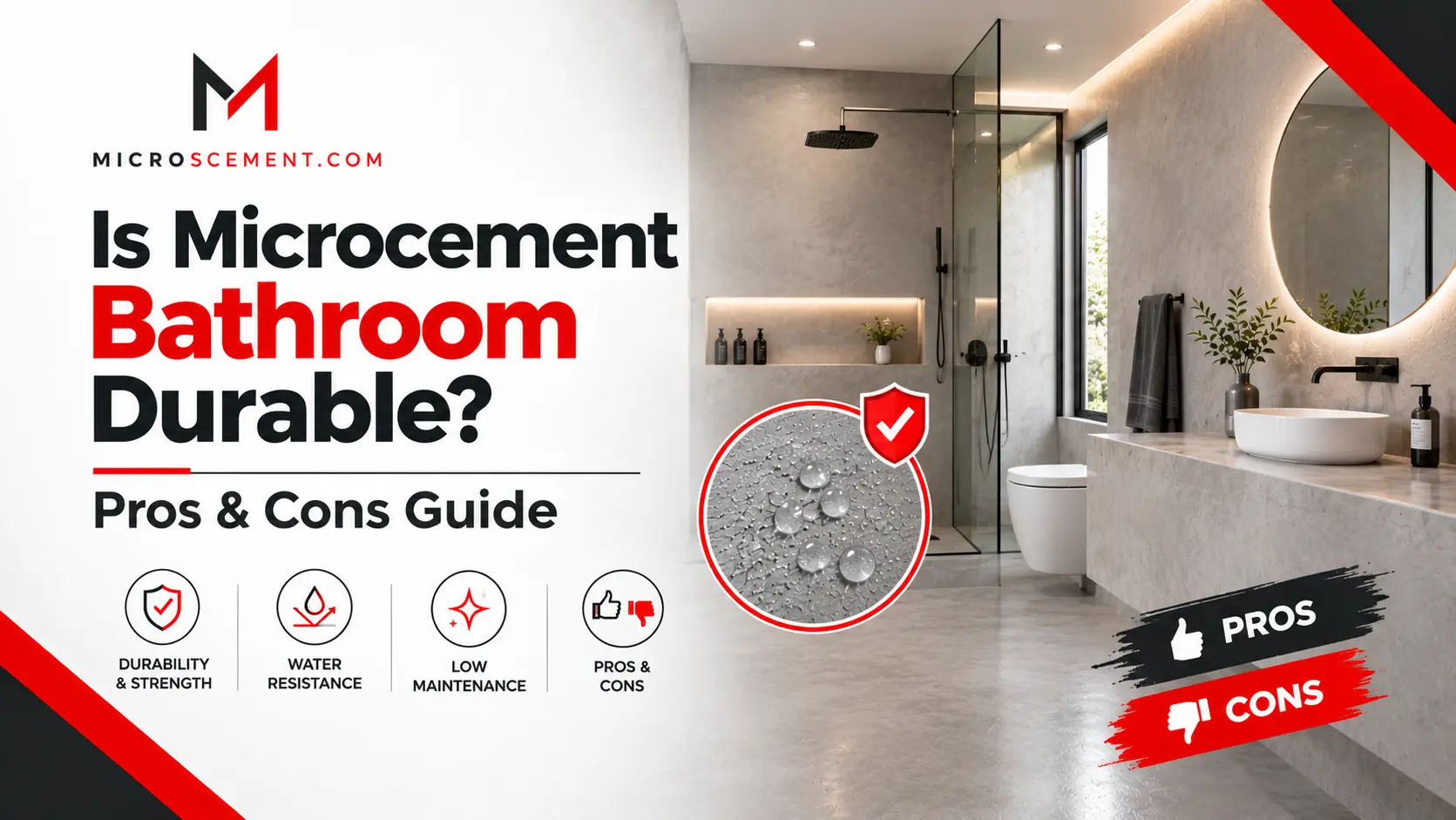
A microcement bathroom is durable enough for daily use when it is installed correctly and sealed with a proper waterproof coating. Without that sealer, though, microcement can wear down fast in a wet space. This guide covers the real pros and cons of microcement bathrooms, common problems homeowners run into, and what affects durability over time.
By the end, you will know whether microcement is a smart, long-term choice for your bathroom.
What Is a Microcement Bathroom?
A microcement bathroom uses a thin, cement-based coating on the floor, walls, or shower instead of traditional tile. It is applied in a few thin layers directly over an existing surface, creating one seamless finish with no grout lines.
This makes microcement popular for a bathroom remodeling project where homeowners want a clean, modern look. At microscement, we install microcement bathrooms across Dallas, from small powder rooms to full master bathrooms.
If you want to see full design examples first, our microcement bathroom ideas page shows real bathroom floor and wall layouts.
How Durable Is Microcement in Bathrooms?
Microcement is durable in bathrooms when it is properly sealed, prepped, and applied by an experienced installer. A well-installed microcement floor or wall can handle years of daily water exposure and foot traffic.
Durability comes down to three things: the surface underneath, the number of coats applied, and the quality of the sealer. Skipping any one of these steps shortens how long the finish will last.
Bathrooms see more water and humidity than any other room in the house. That is exactly why the sealing step matters so much more here than it would on a living room floor. Our what is microcement guide explains how the sealing process protects the surface long-term.
Pros of Microcement Bathrooms
Microcement bathrooms offer a seamless look, easy cleaning, strong water resistance when sealed, and design flexibility across floors, walls, and showers.
- No grout lines Nothing for mold, soap scum, or dirt to collect in.
- Water resistance A properly sealed surface holds up well in a shower remodel or wet bathroom floor.
- Easy to clean A smooth, continuous surface wipes down faster than grouted tile.
- Design flexibility Microcement works on bathroom vanities, walls, and floors for one matching look.
- Faster installation in some cases – It can often go over existing tile installation instead of requiring full demolition.
- Modern appeal A seamless finish fits current 2026 bathroom remodeling trends better than busy tile patterns.
Cons and Common Microcement Bathroom Problems
The most common microcement bathroom problems are cracking from an unstable base, staining from a missing or weak sealer, and uneven color from rushed application.
- Cracking If the surface underneath is loose, cracked, or shifting, the microcement can crack along with it over time.
- Water damage without sealing Microcement is porous on its own. Skipping the sealer allows water to soak in and cause damage.
- Uneven color or texture Rushing the drying time between coats can leave a blotchy or rough finish instead of a smooth one.
- Limited DIY success A DIY microcement bathroom project can look uneven without the right tools and experience.
- Higher upfront cost than basic tile Microcement can cost more per square foot than standard floor tiles, depending on the finish chosen.
These are real trade-offs, not reasons to avoid microcement altogether. Most microcement bathroom problems trace back to skipped steps during installation, not the material itself.
How Microcement Bathroom Installation Works
Microcement bathroom installation takes five steps: prep the surface, apply a primer, add a base coat, add a second coat, then seal it. Most bathroom projects take three to five days.
- Prep the surface The existing bathroom floor or wall is cleaned and lightly sanded so the microcement can bond well.
- Primer A bonding primer helps the first coat stick to the surface underneath, even over old floor tiles.
- Base coat This layer builds up thickness and smooths out any bumps.
- Second coat –A thin, smooth layer creates the final color and texture.
- Sealing –A waterproof sealer protects the surface from water, steam, and daily use.
If your bathroom currently has tile, our microcement over tile installation guide explains what your contractor needs to check before starting.
Where Microcement Works Best in a Bathroom
Microcement works especially well on bathroom floors, shower walls, and accent walls, where a seamless look makes the biggest visual difference.
Microcement Bathroom Floors
A microcement bathroom floor removes grout lines from the space that gets the most water and foot traffic. It pairs well with matching walls for a fully continuous look.
Microcement Bathroom Walls
Microcement bathroom walls work well as a full wall treatment or as an accent behind a vanity. A beige microcement bathroom wall is a popular 2026 choice because it pairs with natural light and wood vanities.
Walk-In Showers
A walk in shower benefits the most from microcement, since the floor and walls can flow into one surface with no seam where water tends to collect.
Microcement is part of a wider category of cement-based coatings used across modern construction. For general background on how cement-based materials cure and bond, Wikipedia’s page on cement offers a helpful overview.
Microcement Bathroom Cost Factors
Microcement bathroom cost depends on square footage, surface condition, the number of coats, and whether existing tile needs removal first.
| Cost Factor | How It Affects Price |
| Bathroom size | Larger bathrooms need more material and labor time |
| Existing surface condition | Cracked or unstable tile may need repair before application |
| Number of coats | Extra coats for durability or color depth raise the price |
| Sealer quality | A stronger waterproof sealer for wet areas costs more |
| Installer experience | Skilled installers charge more but reduce the risk of future problems |
For Dallas-specific numbers on flooring, our flooring cost guide for Dallas breaks down local pricing.
If you want a full breakdown across floors, walls, and showers, our microcement bathroom design and cost guide covers pricing for a complete bathroom.
How to Choose the Right Microcement for Durability
Choose a microcement system rated for wet areas, confirm the sealer is built for constant water exposure, and hire an installer with real bathroom project experience.
- Ask what the sealer is rated for. A shower floor needs stronger protection than a dry accent wall.
- Check the surface underneath first. Loose or damaged tile should be repaired before microcement goes on.
- Review real bathroom project photos. Ask to see finished showers, not just floors in other rooms.
- Confirm the drying time schedule. Rushed coats are one of the top causes of uneven or weak finishes.
- Plan for square footage and budget together. Knowing your space size early helps set realistic cost expectations.
Many homeowners also look up real experiences before deciding. Forums like Quora’s home renovation section offer honest feedback from people who have already lived with a microcement bathroom.
Frequently Asked Questions
Is microcement good for bathrooms?
Yes. Microcement is a strong choice for bathrooms when properly sealed. It resists water, has no grout lines to trap mold, and works well on floors, walls, and showers when installed by an experienced contractor.
What are common microcement bathroom problems?
The most common problems are cracking from an unstable base, staining or water damage from a missing sealer, and uneven color from rushed installation. Most of these issues trace back to skipped steps, not the material itself.
How long does a microcement bathroom last?
A properly sealed microcement bathroom can last many years with normal use. Lifespan depends on the quality of the installation, the sealer used, and how well the surface is maintained over time.
Is microcement more expensive than tile for a bathroom?
Microcement often costs more per square foot upfront than basic tile. Many homeowners find it evens out over time due to lower maintenance needs and a longer lifespan when properly sealed.
Can microcement crack in a bathroom?
Yes, if the surface underneath is unstable or the installation is rushed. A properly prepped base and correct drying time between coats greatly reduce the risk of cracking.
Is beige a good color for a microcement bathroom?
Yes. A beige microcement bathroom is a popular 2026 choice because it pairs well with natural light, wood vanities, and neutral fixtures, giving the space a warm, modern feel.
Conclusion
Microcement is durable enough for daily bathroom use, but only when the surface prep, sealing, and installation are done right. Weighing the real pros and cons upfront helps you set proper expectations before starting your renovation.
If you’re planning a microcement bathroom, take a look at our guide on bathroom renovation with microcement or reach out to talk through your project and budget.