

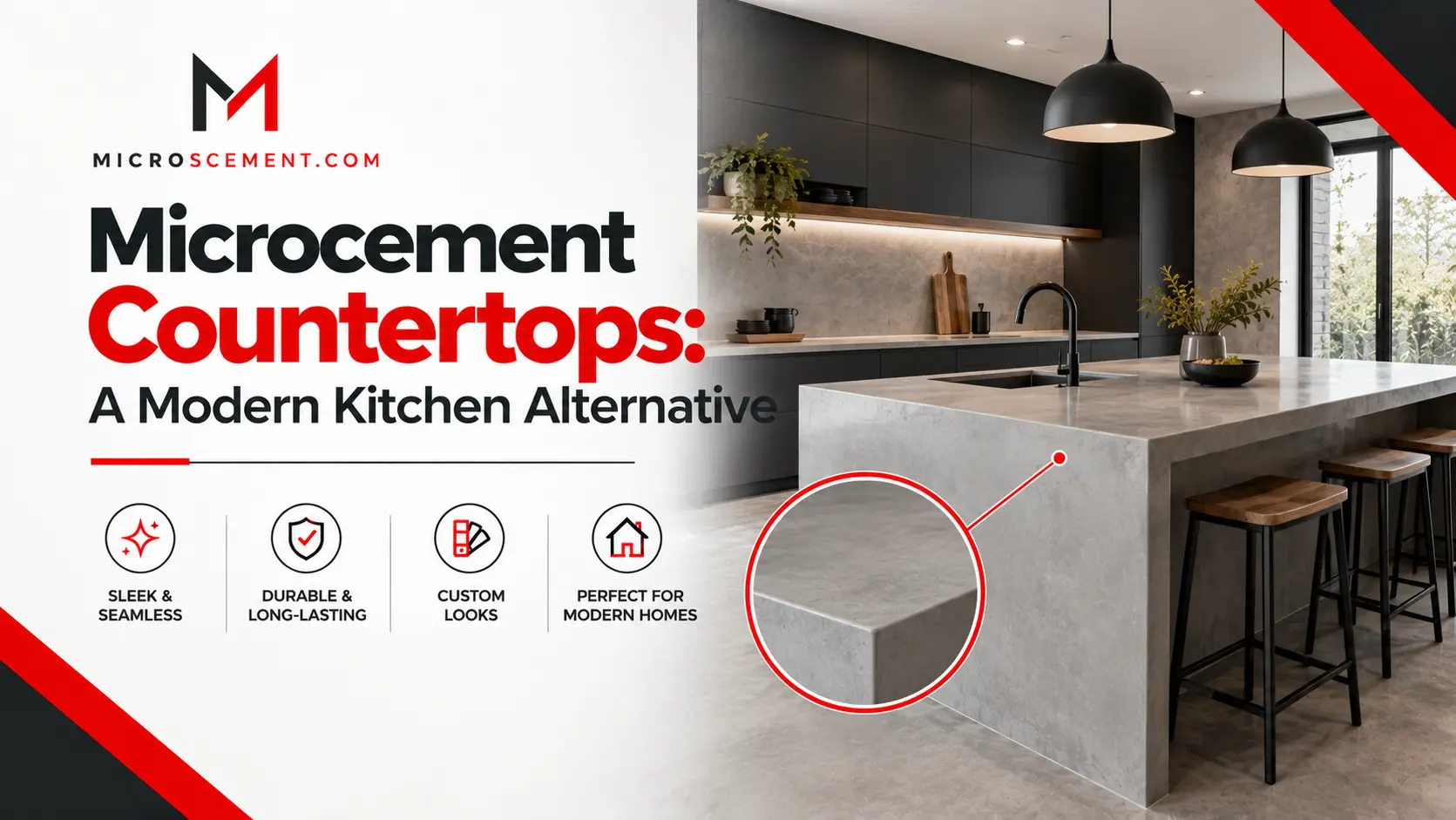
A microcement countertop is a seamless, cement-based surface that gives you a modern alternative to granite, quartz, and laminate. It goes on in thin layers over your existing counter, with no seams and no visible joints. This guide explains what microcement countertops are, how they compare to other materials, and what to expect for design and cost in 2026.
By the end, you will know if a microcement countertop fits your kitchen better than a traditional stone or laminate surface.
What Is a Microcement Countertop?
A microcement countertop is a thin coating made from cement, fine minerals, and polymer resins that is applied directly over an existing counter. Instead of one solid slab like granite, it goes on in a few thin coats that bond to the surface underneath.
This is what makes microcement stand out as an alternative to traditional countertop materials: it creates one continuous surface with no seams, even around a sink cutout. At microscement, we build these seamless surfaces for kitchens across Dallas.
For a full explanation of the material itself, our what is microcement guide covers how it works beyond just countertops.
Some people also search for this material as micro concrete countertop, microcemento, or plaster countertops, since the finished look shares a similar textured, handmade feel.
Why Microcement Is a Strong Alternative to Traditional Countertops
Microcement stands out as an alternative to granite and quartz because it skips the seams, is easier to customize, and does not require a heavy slab install. Kitchen designers are turning to it for a more custom, seamless look.
Granite and quartz slabs come in fixed pieces that need to be seamed together on larger counters. Microcement, by contrast, is applied as a continuous surface, so there is no visible line where two pieces meet.
Laminate countertops are affordable but wear down at the seams and edges over time. Microcement has no seams to wear down, and a well-sealed surface holds up to daily kitchen use for years.
How Microcement Countertop Installation Works
Installing a microcement countertop takes five steps: prep the surface, apply a primer, add a base coat, add a second coat, then seal it. Most kitchens are done in three to five days, factoring in drying time between each coat.
- Prep the surface The existing countertop is cleaned and lightly sanded so the microcement bonds evenly.
- Primer A bonding primer is applied first to help the base coat stick to laminate, tile, or stone.
- Base coat This layer builds up the thickness and evens out the surface.
- Second coat A thin finishing layer creates the final color and texture.
- Sealing A food-safe, heat-resistant sealer locks in protection against water, oil, and daily wear.
Each coat needs full drying time before the next goes on. Skipping that step is one of the most common reasons a finished countertop turns out uneven. Our Topciment microcement installation guide covers the process step by step.
Microcement Countertop vs Other Materials
The table below compares microcement countertops against granite, quartz, and laminate on the factors that matter most for a kitchen.
| Feature | Microcement | Granite | Quartz | Laminate |
| Seams | None | Visible on large counters | Visible on large counters | Visible at edges and joints |
| Customization | High – any shape or color | Limited to slab patterns | Limited to slab patterns | Limited to sheet patterns |
| Install method | Applied in thin coats over existing surface | Heavy slab, often needs new support | Heavy slab, often needs new support | Sheet installed over base |
| Heat resistance | Good with proper sealer | Very good | Good | Poor near direct heat |
| Repair | Can be resealed or touched up | Hard to repair once chipped | Hard to repair once chipped | Difficult to repair cleanly |
Design Ideas for Stylish Kitchens
The most popular microcement countertop looks for 2026 combine a neutral counter with a matching backsplash, bar top, or bold accent color.
Microcement Backsplash Matching
A microcement backsplash extends the same seamless surface up the wall behind the stove and sink. This keeps the whole cooking area free of grout lines and easy to wipe down.
Microcement Kitchen Bars
A microcement bar top gives an open kitchen or entertaining area a bold, continuous surface. Many homeowners choose a darker tone for the bar to stand out against lighter countertops.
Outdoor Microcement Kitchen Countertops
An outdoor microcement kitchen countertop brings the same seamless look to a covered patio kitchen. It needs a weather-rated sealer to hold up against Dallas sun and heat.
DIY Microcement Countertop Kits
A diy microcement kit can work for lower-use surfaces, like a small bar or accent counter. Main kitchen counters usually call for a professional-grade system built to handle daily cooking.
Benefits of Choosing Microcement Countertops
Microcement countertops are easy to clean, offer a seamless surface, work in high-traffic kitchens, and give you far more design freedom than a slab material.
- Easy to clean No seams or grout lines means grease and food have nowhere to collect.
- Seamless surface One continuous countertop, even around sinks and edges.
- High-traffic durability A sealed surface handles daily cooking and cleaning well.
- Design freedom Choose custom colors and textures instead of picking from fixed slab patterns.
- No heavy slab required Microcement applies directly over most existing counters.
- Matches other surfaces The same finish can extend to a backsplash, bar, or floor for one unified kitchen look.
Common Mistakes to Avoid
The most common mistakes are skipping the sealer, choosing the wrong sealer for outdoor use, and rushing the drying time between coats.
- Skipping the sealer An unsealed microcement countertop can absorb oil, wine, or coffee stains.
- Using an indoor sealer outdoors Outdoor microcement kitchen countertops need a sealer rated for sun and weather, not a standard indoor product.
- Rushing between coats Moving too fast between the base coat and second coat can leave the surface uneven or soft.
- Placing hot pans directly on the surface Even a sealed countertop benefits from a trivet to protect the finish long-term.
- Choosing a light-use DIY kit for a busy kitchen A basic microcement countertop kit is fine for low-traffic spots, not a main cooking counter.
Microcement fits into a wider category of cement-based building materials. For general background on how cement is made and used, Wikipedia’s page on cement offers a useful overview.
Cost Factors for Microcement Countertops
Microcement countertop cost depends on the size of the counter, the number of coats, the sealer grade, and whether the project includes sink cutouts or custom edges.
Larger counters and more detailed cutouts naturally take more labor time, which raises the price compared to a simple, flat countertop. Outdoor kitchen counters also cost more due to the stronger sealer needed for weather protection.
For a broader look at what drives microcement pricing across a home, our flooring cost and benefits guide breaks down the same cost factors that apply to floors and counters alike.
If you’re weighing microcement against other durable finishes, our exposed aggregate concrete cost guide gives a helpful side-by-side comparison.
How to Choose the Right Microcement for Your Countertop
Choose a microcement system rated for countertop use, confirm the sealer is food-safe, and hire an installer with real countertop project experience, not just floors or walls.
- Ask what the sealer is rated for. Kitchen counters need food-safe, heat-resistant protection.
- Review past countertop work. Photos of floors or walls do not show how the material performs on a counter.
- Decide on indoor or outdoor use early. This changes which sealer and system the installer should use.
- Pick a color that fits your whole kitchen. Think about how the counter will look next to your cabinets and backsplash.
- Ask about long-term care. A good installer will explain resealing schedules and daily cleaning tips upfront.
If you want to see how the full kitchen comes together, our microcement kitchen guide covers floors, walls, and countertops as one project.
Before deciding, many homeowners also check real experiences from other renovators. Sites like Quora’s home renovation section offer honest feedback from people who chose microcement over granite or quartz.
Frequently Asked Questions
Is microcement a good alternative to granite countertops?
Yes. Microcement offers a seamless surface with no visible joints, unlike granite slabs that need seams on larger counters. It also allows more custom color and shape options than a fixed granite slab pattern.
How does microcement compare to quartz countertops?
Microcement and quartz are both durable, but microcement applies in thin coats over an existing surface, while quartz requires a heavy slab install. Microcement also allows more custom shaping around sinks and edges.
Can microcement countertops handle daily kitchen use?
Yes, when properly sealed with a food-safe, heat-resistant coating. A microcement countertop built for a busy kitchen holds up to cooking, cleaning, and daily wear as well as many traditional materials.
Are microcement countertops more affordable than granite?
It depends on the project. Microcement often costs less than premium granite or quartz slabs, but pricing varies based on counter size, sealer grade, and any custom cutouts needed.
Can you use microcement for an outdoor kitchen countertop?
Yes. Outdoor microcement kitchen countertops work well on covered patios when finished with a weather-rated sealer. A standard indoor sealer will not hold up to constant sun and rain exposure.
Is a microcement countertop kit good for a DIY project?
A diy microcement countertop kit works well for small, low-use surfaces like an accent bar. Main kitchen counters usually need a professional-grade system to handle daily cooking and cleaning.
Conclusion
Microcement countertops give kitchens a seamless, custom alternative to granite, quartz, and laminate, without the seams or heavy slab install. The right choice comes down to a proper sealer, careful installation, and a design that fits your kitchen’s overall style.
If you’re comparing options for your next renovation, explore our guide on microcement bathroom design or reach out to talk through your countertop project and budget.