

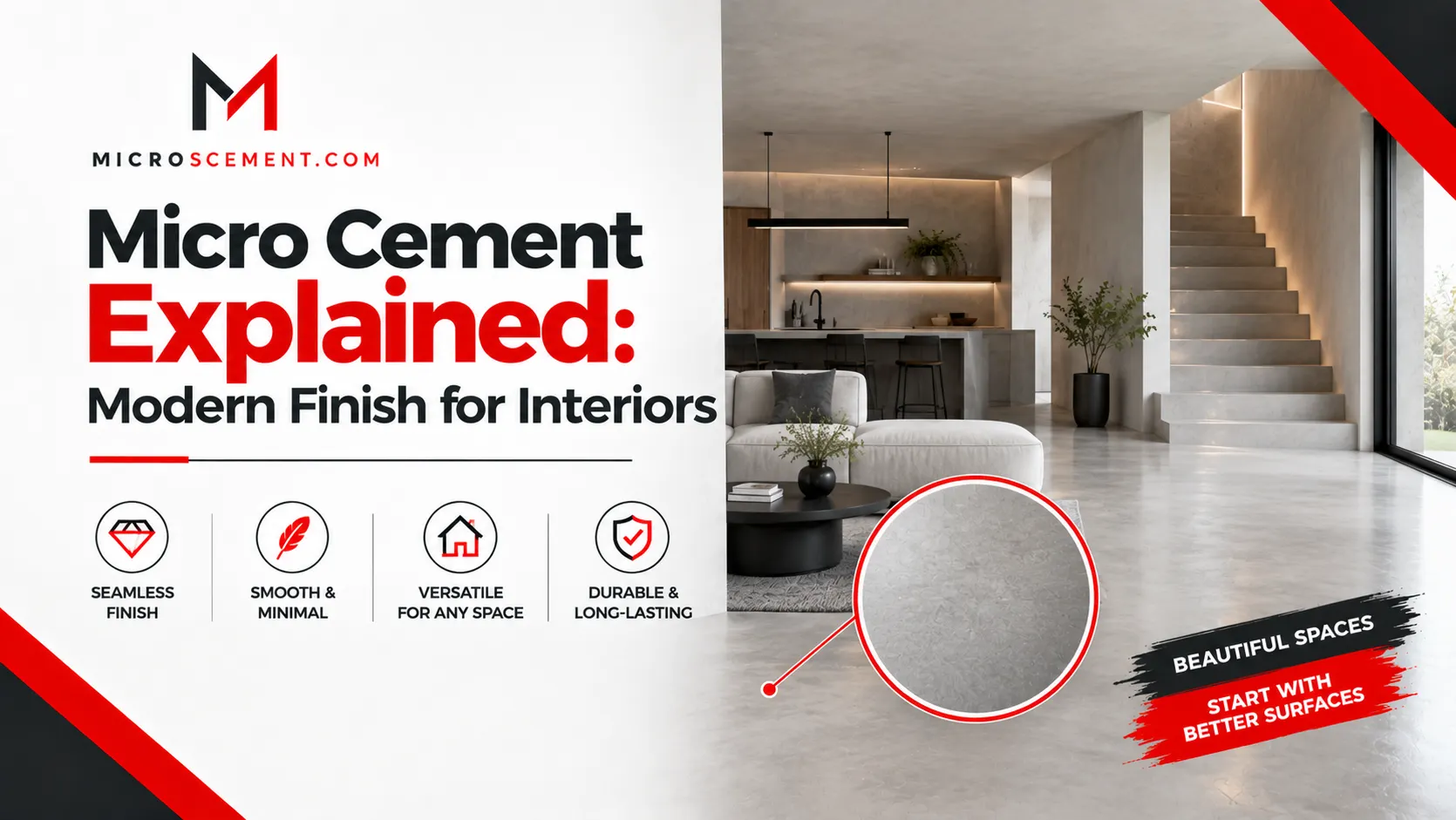
Micro cement is a thin, cement-based coating that creates one smooth, seamless surface on floors, walls, showers, and countertops. It goes on in a few thin coats and can cover almost any existing surface without a full tear-out. This guide explains what micro cement is, how it works, where you can use it, and what it costs.
By the end, you will know why so many homeowners and designers are switching to micro cement for modern interiors.
What Is Micro Cement?
Micro cement is a decorative coating made from cement, fine minerals, and polymer resins. It is applied in a thin layer, usually just a few millimeters thick, right on top of your existing surface.
Unlike tile, micro cement has no grout lines. Once it cures, it forms one continuous surface across the whole floor, wall, or countertop. That seamless look is why it has become such a popular choice in modern interior design. At microscement, we install this finish across Dallas homes every week.
If you want a deeper technical breakdown, our what is microcement guide covers the material in full detail.
You may also see this material called micro concrete, microcemento, or microtopping concrete. These are all names for the same type of thin cement-based finish.
Why Micro Cement Is Transforming Interior Design
Micro cement is changing interior design because it removes the busy, broken-up look of tile and replaces it with one clean, flowing surface. Designers use it to make small rooms feel larger and modern homes feel more open.
Tile and grout show wear fast. Grout lines crack, stain, and trap dirt over time. Micro cement skips that problem completely, since there are no joints for dirt or water to collect in.
This shift matters in Dallas homes too. Local heat and humidity can make grout discolor and crack faster than in cooler climates. A properly sealed micro cement surface holds up better against these conditions and keeps its look for years.
How Micro Cement Application Works
Applying micro cement takes five steps: prep the surface, add a primer, apply the base coat, apply a second coat, then seal it. A typical room takes three to five days from start to finish, including drying time between coats.
- Prep the surface Workers clean and lightly sand the existing surface, even old tile, so the micro cement can bond properly.
- Primer A bonding primer helps the first coat stick to floors, walls, or countertops.
- Base coat This layer builds up thickness and evens out any bumps in the surface.
- Second coat A thinner coat creates the final color and texture.
- Sealing A sealer protects the surface from water, stains, and daily wear.
Drying time matters at every stage. Each coat needs to cure fully before the next one goes on, or the finish can crack or look uneven later. Our Topciment microcement installation guide walks through the full process.
Where You Can Use Micro Cement
Micro cement works on floors, walls, showers, countertops, bathtubs, and even fireplaces. It is suitable for both wet and dry areas, as long as the right sealer is used.
Micro Cement Floors
Micro cement floors create one smooth surface with no grout lines to clean around. They work well in kitchens, living rooms, and hallways. Our micro concrete flooring page shows more floor finish examples.
Micro Cement Walls
Micro cement walls give a textured, modern backdrop for living rooms, hallways, or accent walls. This finish also works well applied over existing tiled walls.
Micro Cement Showers and Bathrooms
Micro cement shower walls and floors are becoming a top choice for bathroom renovations because they are slip resistant when properly finished and stay in constant contact with water without breaking down. Our microcement bathroom ideas page covers layout options in more detail.
Micro Cement Countertops
Micro cement countertops offer a custom, seamless look that regular slab materials cannot match. You can shape them around a sink or stove without visible seams.
Micro Cement Fireplaces
A micro cement fireplace surround adds a modern, textured focal point to a living room, and it holds up well to the heat exposure near a fireplace when properly sealed.
Benefits of Micro Cement
Micro cement is easy to clean, offers weather resistance, works in high-traffic areas, and gives you full design flexibility across a home.
- Easy to clean No grout lines means no scrubbing between tiles.
- Weather resistance Sealed micro cement holds up well indoors and in covered outdoor spaces.
- Durable in high-traffic areas A properly sealed surface handles daily foot traffic without wearing down quickly.
- Design flexibility Micro cement comes in a wide range of colors and textures.
- Works almost anywhere The same material can cover floors, walls, showers, and countertops for one unified look.
- Faster installation It often goes directly over existing surfaces, cutting down demolition time.
Common Problems and Mistakes to Avoid
The most common mistakes are skipping the sealer, applying micro cement over an unstable surface, and rushing the drying time between coats.
- Skipping the sealer Without a sealer, micro cement is porous and can absorb water or stains. The sealer is what makes the surface functional day to day.
- Applying over unstable tile If the old surface underneath is loose or cracked, the finish can crack later too. Our microcement over tile installation guide explains what to check first.
- Rushing between coats Each layer needs proper drying time. Moving too fast can leave a soft, uneven finish.
- Using the wrong sealer for wet areas A wall sealer is not always strong enough for a shower floor or countertop.
- Skipping professional prep on walls Wall prep is different from floor prep. Our wall prep guide covers what a tiled wall needs before micro cement goes on.
Micro cement belongs to a broader family of cement-based building materials. For general background on how cement works as a material, Wikipedia’s page on cement offers a helpful overview.
Micro Cement Cost Factors
Your cost depends on the surface type, room size, existing surface condition, and the number of coats needed. Countertops and shower areas usually cost more per square foot than plain wall or floor sections.
| Cost Factor | How It Affects Price |
| Surface type | Countertops and showers cost more than flat walls or floors |
| Room size | Larger spaces need more material and labor time |
| Existing surface condition | Damaged tile or drywall may need repair first |
| Number of coats | More coats for durability or deep color raise the price |
| Sealer grade | Wet-area sealers cost more than standard indoor sealers |
| Installer experience | Skilled installers charge more but reduce the risk of cracking |
If you’re comparing flooring costs specifically, our micro cement flooring cost guide breaks down local Dallas pricing.
For a wider view of what drives pricing across different rooms, see our flooring cost and benefits guide.
How to Choose the Right Micro Cement
Choose a system rated for your specific surface, confirm the sealer matches your wet or dry area, and hire an installer with experience in that exact application.
- Match the product to the room. A floor-rated system is not always suitable for a shower wall.
- Confirm the sealer type. Wet areas need a stronger, waterproof sealer than dry walls or living spaces.
- Ask for real project photos. Look for finished examples in the same room type you’re planning.
- Check for local experience. An installer familiar with Dallas heat and humidity will know how it affects drying and curing time.
- Plan for your existing surface. If you’re covering old tile, confirm your installer has handled that transition before, as explained in our Topciment microcement guide.
Many homeowners also look into what other people experienced before starting their own project. Sites like Quora’s home renovation section offer real feedback from people who have already installed micro cement in their homes.
Frequently Asked Questions
What is micro cement?
Micro cement is a thin decorative coating made from cement, minerals, and polymers that creates a seamless surface on floors, walls, showers, and countertops. It applies in thin layers directly over most existing surfaces without a full demolition.
Is micro cement the same as micro concrete?
Yes, in most cases. Micro cement and micro concrete are terms used to describe the same type of thin, cement-based coating. Both create smooth, continuous surfaces with no grout lines.
Can micro cement be used in a shower?
Yes. Micro cement can be used in a shower when it is finished with a proper waterproof sealer. Without sealing, the surface can absorb water and wear down faster in constant wet conditions.
How long does micro cement last?
A properly installed and sealed micro cement surface can last many years with normal care. Its lifespan depends on installation quality, the sealer used, and regular maintenance over time.
Can you apply micro cement over existing tile?
Yes, in most cases. Micro cement can be applied directly over stable, clean tile once it is properly primed. This saves the time and cost of removing the old tile first.
Is micro cement expensive compared to tile?
Micro cement often costs more per square foot upfront than basic tile, but it can save money over time due to lower maintenance and a longer lifespan. Final cost depends on the surface, room size, and finish quality you choose.
Conclusion
Micro cement is reshaping interior design by replacing grout lines and seams with one smooth, modern surface that works on floors, walls, showers, and countertops. Getting the best result comes down to proper prep, the right sealer, and an experienced installer.
If you’re ready to explore micro cement for your own home, take a look at our guide on microcement bathroom design or reach out to talk through your project and budget.