

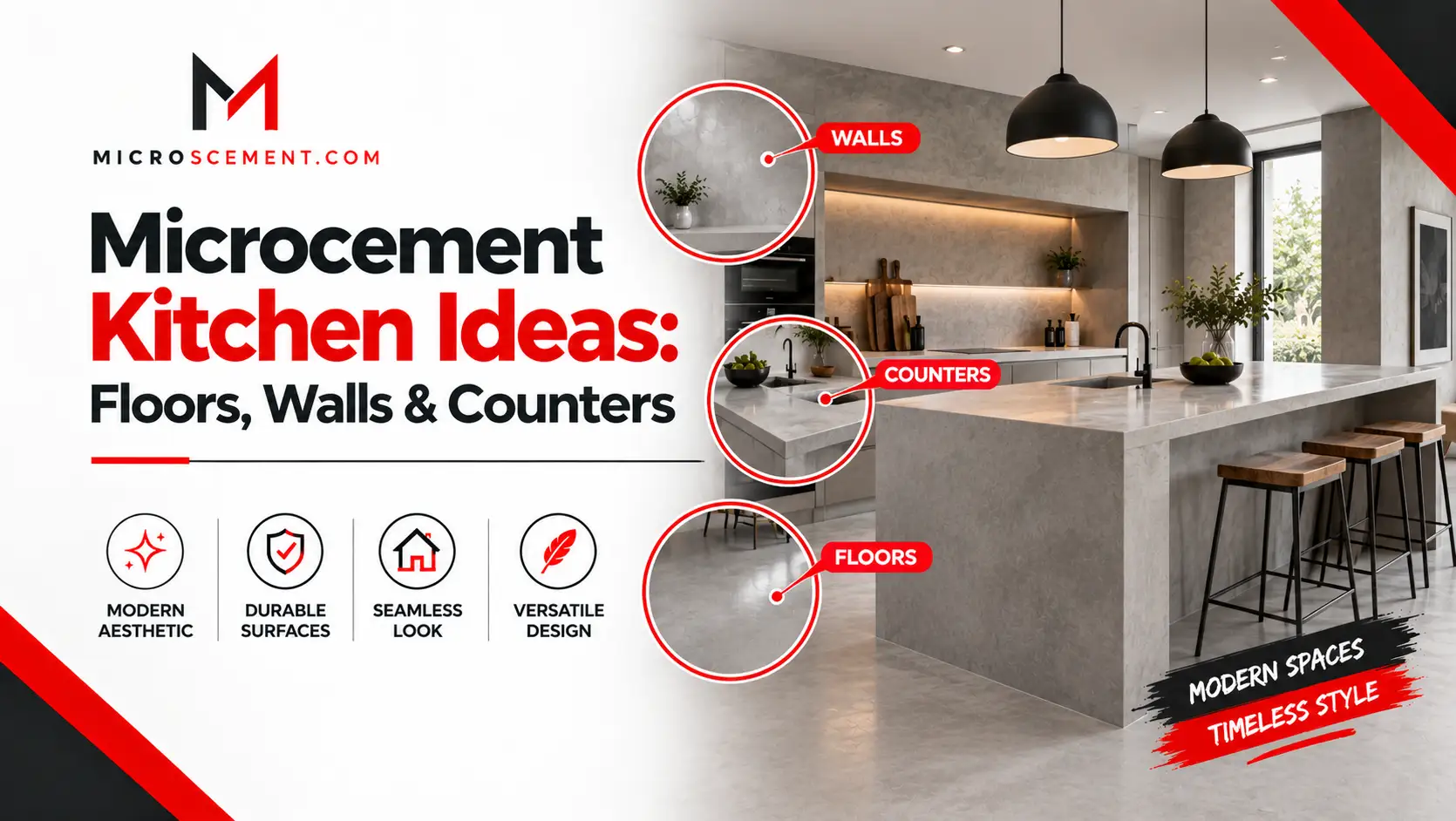
A microcement kitchen gives you smooth, seamless floors, walls, and countertops with no grout lines. You can use it on one surface or the whole room for a clean, modern look. This guide covers what microcement is, the best kitchen design ideas for 2026, how it holds up day to day, and what it costs.
By the end, you will know if microcement is the right fit for your kitchen.
What Is Microcement?
Microcement is a thin, cement-based coating you can apply straight over floors, walls, and countertops. It comes in a kit and goes on in thin coats, so there is no need to rip out your old surface first.
Once it cures, microcement forms one smooth, continuous surface. There are no grout lines and no seams. That is why more homeowners are choosing it over tile for kitchen floors, backsplashes, and countertops. At microscement, we work with this material in kitchens across Dallas.
If you want the full picture of how this material works, our what is microcement guide breaks it down step by step.
Why Microcement Works So Well in Kitchens
Microcement works well in kitchens because it resists stains, hides seams, and holds up to daily spills and heat better than grouted tile. Kitchens take a lot of abuse from cooking, water, and foot traffic, and microcement is built for that.
Grout lines in a kitchen backsplash or floor trap grease and food stains fast. Microcement has no lines, so there is nothing for grease to soak into.
This matters even more in Dallas kitchens, where heat and humidity can make tile grout crack and discolor faster. A sealed microcement surface holds its color and stays smooth for years.
How Microcement Application Works
Applying microcement takes five main steps: prep the surface, add a primer, apply the base coat, apply the second coat, then seal it. Most kitchen projects take three to five days from start to finish.
- Prep the surface Workers clean and lightly sand the old countertop, wall, or floor so the microcement can bond well.
- Primer A bonding primer goes on first to help the microcement stick to the existing surface.
- First coat This layer builds up thickness and smooths out any bumps or dips.
- Second coat A thinner layer gives you the final color and texture you want.
- Sealing A food-safe, waterproof sealer protects the surface from water, heat, and stains.
Cure time matters here. Each coat needs time to dry before the next one goes on, and the full cure can take a few days before the surface is ready for heavy use. For a full walkthrough of the process, check our Topciment microcement installation guide.
Microcement Kitchen Design Ideas for 2026
The top microcement kitchen trends for 2026 are warm neutral floors, textured backsplashes, and countertops that flow into the wall with no seam.
Microcement Kitchen Floors
A microcement kitchen floor gives you one smooth surface with no grout lines to mop around. It pairs well with wood cabinets and open shelving for a warm, modern look. Our micro concrete flooring page shows more floor finish options.
Microcement Backsplash Ideas
A microcement backsplash replaces tile behind your stove and sink with one clean, easy-to-wipe surface. It works well in a matching or contrasting color to your countertop. If you are covering an existing tiled wall, our wall prep guide explains how to get it ready.
Microcement Countertops
A microcement countertop gives you a custom, seamless look you cannot get with slab stone. You can shape it around a sink or stove without visible seams, and it comes in almost any color.
Microcement Kitchen Bars and Islands
A microcement bar or island top adds a bold focal point to an open kitchen. Many homeowners pair a dark microcement island with lighter microcement floors for contrast.
Outdoor Microcement Kitchens
An outdoor microcement kitchen works well for Dallas backyards with covered patios. It stands up to sun and weather better than painted surfaces, as long as it is sealed for outdoor use.
Benefits of Microcement Kitchens
Microcement kitchens are easy to clean, resistant to stains, flexible in design, and built to handle daily kitchen use.
- Easy to clean No grout lines means grease and food do not get trapped.
- Seamless look Countertops, backsplashes, and floors can all match for one continuous surface.
- Heat and stain resistance A sealed surface holds up well near stoves and sinks.
- Design freedom You can pick almost any color, from soft neutrals to deep charcoal.
- Works indoors and outdoors –The same material can cover an indoor kitchen or an outdoor patio kitchen.
- Faster installation Microcement often goes over existing surfaces, so there is less demolition.
Common Problems and Mistakes to Avoid
The biggest mistakes are skipping the sealer, applying it over an unstable surface, and rushing the cure time between coats.
- Skipping the sealer Without a sealer, microcement can stain from oil, wine, or coffee. The sealer is what makes it kitchen-ready.
- Applying over loose tile If the old tile or surface underneath is unstable, the microcement can crack later. Check our microcement over tile installation guide before starting a project like this.
- Rushing the cure time Each coat needs to dry fully before the next goes on. Skipping ahead can leave the surface soft or uneven.
- Using a cheap DIY kit for a countertop A diy microcement kit can work for small accent pieces, but countertops near heat and water need a professional-grade system.
- Ignoring heat exposure Placing very hot pans directly on microcement without a trivet can damage the sealer over time.
Microcement is part of a wider family of cement-based finishes used in modern construction. You can read more about the base material on Wikipedia’s page on cement.
Microcement Kitchen Cost Factors
Your cost depends on the size of the space, which surfaces you are covering, the color you choose, and whether you need to remove an old surface first. Kitchen projects usually cost more than a single bathroom wall because more surfaces are involved.
| Cost Factor | How It Affects Price |
| Surface type | Countertops cost more per square foot than floors |
| Room size | Larger kitchens need more material and labor time |
| Old surface condition | Damaged tile or countertops may need repair first |
| Number of coats | Extra coats for durability or deep color raise the price |
| Sealer grade | Food-safe, heat-resistant sealers cost more than basic ones |
| Installer experience | Skilled installers charge more but reduce the risk of future cracks |
If you’re planning a kitchen floor project in Dallas, our microcement flooring cost guide breaks down local pricing.
For a broader look at what affects microcement pricing across a home, see our flooring cost and benefits guide.
How to Choose the Right Microcement for Your Kitchen
Pick a microcement system rated for kitchen use, confirm the sealer is food-safe and heat-resistant, and hire an installer who has done kitchen countertops before.
- Check the sealer rating. Not every sealer is safe near food prep areas or stovetops.
- Match the finish to your layout. A light floor with a dark island, or a matching floor-to-backsplash look, both work well depending on your kitchen size.
- Ask about past kitchen projects. Ask to see finished countertops and backsplashes, not just floors.
- Plan for your existing surfaces. If you’re covering old tile or laminate, make sure your installer has handled that transition before.
- Think about upkeep. Ask what daily cleaning and occasional resealing will look like so you know what to expect.
For homeowners in North Texas, our Dallas wall finish guide covers regional considerations like humidity and heat.
Many homeowners also read real project stories before deciding. Forums like Quora’s home renovation section have honest feedback from people who have already installed microcement in their own kitchens.
Frequently Asked Questions
Is microcement good for kitchen countertops?
Yes. Microcement countertops are seamless, custom-fit, and resistant to stains once sealed. They work well around sinks and stoves, but the sealer needs to be a food-safe, heat-resistant grade for daily kitchen use.
Can you apply microcement over an existing countertop?
Yes, in most cases. Microcement can go directly over laminate, tile, or solid surface countertops if the base is clean, stable, and properly primed. This avoids the cost and mess of removing the old countertop.
How long does microcement last on a kitchen floor?
A properly sealed microcement kitchen floor can last many years with normal cleaning. Lifespan depends on the quality of the install, the sealer used, and how well the floor is maintained over time.
Is microcement easy to apply yourself?
A DIY microcement kit can work for small projects like an accent wall or backsplash. Kitchen countertops and floors see more daily wear, so most homeowners hire a professional for those areas to avoid cracking or uneven color.
Can microcement be used outdoors in a kitchen?
Yes. Outdoor microcement kitchens are common on covered patios, as long as the system is rated for outdoor use and properly sealed against sun and weather exposure.
What is the difference between microcement and micro concrete?
Microcement and micro concrete are often used to describe the same type of thin, cement-based coating. Both create a seamless surface for floors, walls, and countertops with no visible grout lines.
Conclusion
A microcement kitchen gives you seamless floors, walls, and countertops that stand up to daily cooking, spills, and heat. The right result comes down to a proper cure time, a food-safe sealer, and an installer who understands kitchen surfaces.
If you’re planning a microcement project for your home, take a look at our related guide on microcement bathroom design or reach out to talk through your kitchen layout and budget.