

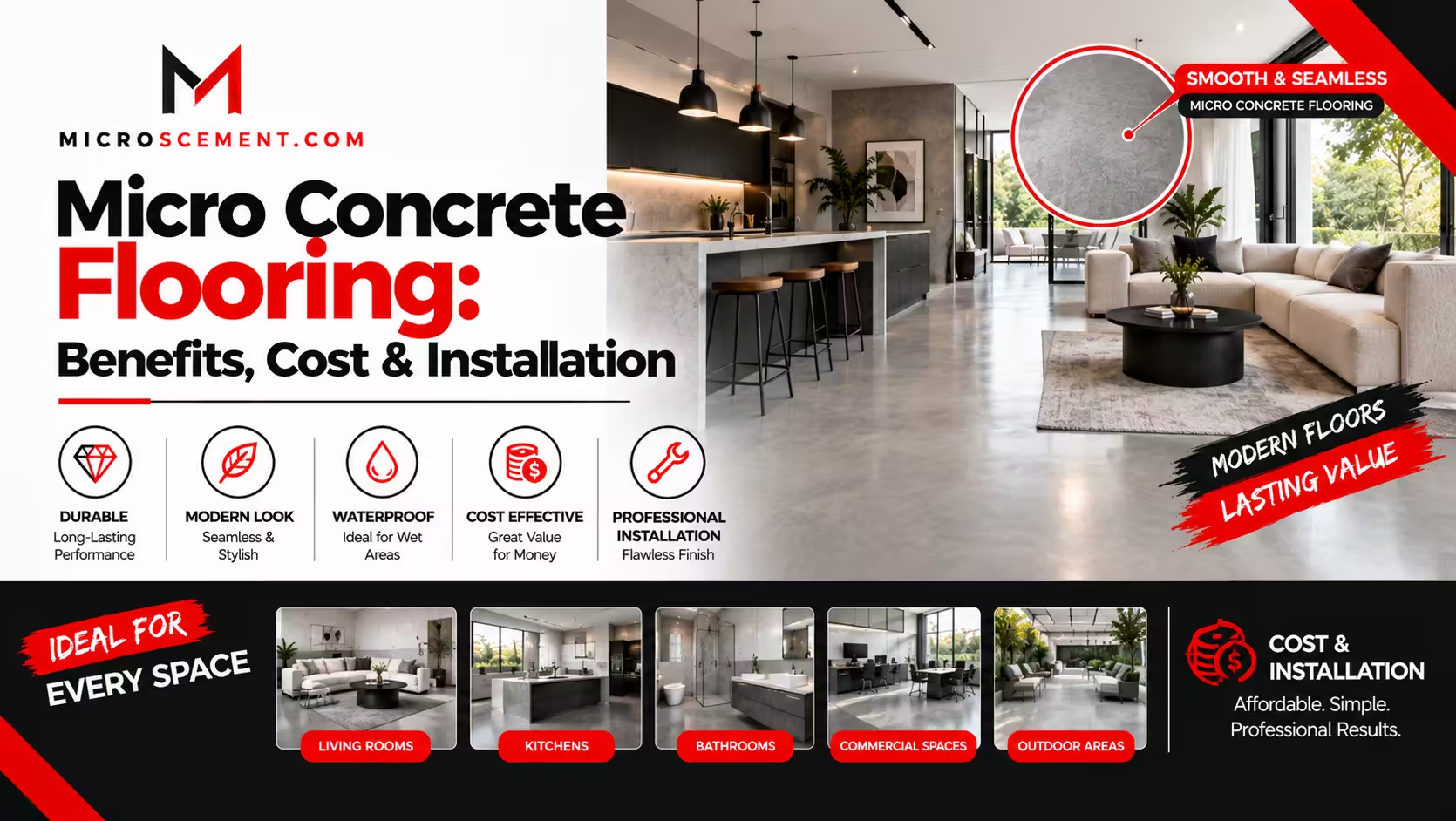
Modern homeowners and designers are constantly searching for flooring solutions that combine durability, style, and easy maintenance. Traditional flooring materials such as tiles, stone, and hardwood remain popular, but many people now prefer seamless finishes that create a clean and contemporary appearance. Micro Concrete Flooring has become a popular choice because it offers a smooth, durable surface that works well in residential, commercial, and outdoor spaces.
Before choosing this flooring solution, it is important to understand the material, installation process, advantages, and overall costs. Many homeowners begin their research by exploring Microscement solutions to understand how decorative cement-based finishes can transform different surfaces. These modern coatings provide a stylish alternative to traditional flooring while offering excellent durability and flexibility.
Understanding the basics of the material is the first step before starting any project. Learning What Is Microcement helps homeowners and contractors understand how this thin-layer coating works, where it can be applied, and why it has become a preferred choice for modern interior design. Microcement is a cement-based decorative finish that creates seamless surfaces without the need for traditional tiles or grout lines.
Proper installation plays a major role in achieving long-lasting results. Following professional TopCiment Microcement Installation methods ensures the surface is correctly prepared, applied, and sealed. Proper techniques help prevent issues such as cracking, uneven textures, and premature wear.
What Is Micro Concrete Flooring?
Micro concrete flooring is a decorative flooring system made from a cement-based coating that is applied in thin layers over existing surfaces. Unlike traditional concrete floors, micro concrete does not require thick applications or major structural changes.
This flooring solution creates a seamless surface with a modern appearance while maintaining strength and durability. It can be customized with different colors, textures, and finishes, making it suitable for various design styles.
Micro concrete flooring is commonly used in:
- Residential homes
- Kitchens
- Bathrooms
- Living areas
- Offices
- Retail spaces
- Hotels
- Outdoor areas
One of the biggest advantages of this material is that it can often be installed over existing floors, reducing demolition work and renovation time.
Benefits of Micro Concrete Flooring
Micro concrete flooring offers several advantages that make it attractive for homeowners, architects, and contractors.
Seamless and Modern Appearance
One of the most noticeable benefits is its smooth, continuous finish.
Unlike traditional tiles that require grout lines, micro concrete creates a seamless surface that provides a clean and minimalist look. This makes rooms appear larger and more open.
The absence of joints also reduces areas where dirt, dust, and moisture can accumulate.
Highly Durable Surface
Durability is one of the main reasons homeowners choose micro concrete flooring.
When properly installed and sealed, it can resist:
- Daily foot traffic
- Scratches
- Minor impacts
- Moisture exposure
- General wear
This makes it suitable for busy households and commercial environments where flooring experiences regular use.
Easy Maintenance
Micro concrete floors are simple to clean compared to many traditional flooring options.
Because there are no grout lines, homeowners spend less time removing dirt and stains from difficult areas.
Regular maintenance usually includes:
- Sweeping
- Dust removal
- Mopping with suitable cleaners
- Periodic resealing when required
Its low-maintenance nature makes it a practical choice for modern lifestyles.
Flexible Design Options
Micro concrete flooring is available in various colors, textures, and finishes.
Homeowners can create:
- Minimalist interiors
- Industrial-style designs
- Contemporary spaces
- Luxury finishes
The material can be customized to match different architectural styles and personal preferences
Where Can Micro Concrete Flooring Be Used?
One of the reasons micro concrete has become popular is its versatility. It can be applied in many areas where both appearance and performance matter.
Residential Flooring
Micro concrete is widely used in homes because it creates a modern, seamless appearance.
Popular residential applications include:
- Living rooms
- Dining areas
- Bedrooms
- Hallways
- Kitchens
Its ability to blend with different design styles makes it suitable for both modern and traditional homes.
Kitchen Flooring
Kitchens require flooring that can handle spills, moisture, and frequent cleaning.
Micro concrete provides a durable surface that works well with modern kitchen designs.
Its seamless finish creates a cleaner appearance while making maintenance easier.
Bathroom Applications
Bathrooms are another popular area for decorative cement finishes.
Homeowners looking for inspiration can explore Microcement Bathroom Ideas to understand how seamless surfaces can be used for shower walls, bathroom floors, and wet areas.
When properly sealed, micro concrete provides moisture resistance and creates a spa-like appearance.
Commercial Spaces
Businesses often choose micro concrete flooring because it combines durability with visual appeal.
Common commercial applications include:
- Restaurants
- Offices
- Showrooms
- Hotels
- Retail stores
The professional appearance and easy maintenance make it suitable for high-traffic environments.
Micro Concrete Flooring Installation Process
Proper installation is essential for achieving a strong and attractive finish. Although the material appears simple, professional application requires experience and attention to detail.
Surface Preparation
The first step is preparing the existing surface.
Professionals inspect the area for:
- Cracks
- Uneven sections
- Moisture problems
- Loose materials
The surface must be clean, stable, and properly prepared before applying micro concrete layers.
Poor preparation can lead to future problems such as cracking or peeling.
Applying Base Layers
After preparation, the installer applies the base layer.
This creates a strong foundation and helps the material bond properly with the surface underneath.
The number of layers depends on the project requirements and desired finish.
Applying Decorative Layers
The decorative layers create the final appearance.
During this stage, professionals carefully control:
- Texture
- Thickness
- Color consistency
- Surface smoothness
This step requires skill because small application differences can affect the final appearance.
Sealing and Protecting the Surface
After the micro concrete layers are applied and fully dried, the surface needs to be sealed. The protective sealer improves durability and helps protect the flooring from moisture, stains, and everyday wear.
A quality sealant provides additional benefits, including:
- Improved water resistance
- Easier cleaning
- Better stain protection
- Longer surface lifespan
- Enhanced appearance
The sealing process is especially important for areas exposed to moisture, such as kitchens, bathrooms, and outdoor spaces.
Cost of Micro Concrete Flooring
The cost of micro concrete flooring depends on several factors, including the size of the area, surface condition, materials selected, installation complexity, and finishing options.
Unlike traditional flooring materials where pricing is often based only on the material itself, micro concrete projects involve detailed preparation and skilled application.
Size of the Project
Larger flooring areas may have a different cost structure compared to smaller spaces because installation efficiency improves with bigger projects.
However, smaller areas may sometimes cost more per square meter because preparation and setup expenses remain similar.
Condition of the Existing Surface
The condition of the current floor significantly affects the overall cost.
If the existing surface requires:
- Crack repairs
- Leveling
- Moisture treatment
- Additional preparation
the installation process may require extra time and materials.
A properly prepared surface creates better long-term results.
Type of Finish Selected
Micro concrete flooring can have different textures, colors, and finishes.
Customized finishes may increase the cost depending on the complexity of the design.
Options may include:
- Smooth finishes
- Textured surfaces
- Decorative effects
- Custom colors
Homeowners should discuss their preferred style with an experienced installer before finalizing the budget.
Professional Installation Costs
While DIY applications may seem attractive, professional installation usually provides better durability and appearance.
Experienced installers understand:
- Proper layer thickness
- Surface preparation
- Drying times
- Sealing techniques
- Finishing methods
This expertise helps prevent costly repairs in the future.
Micro Concrete Flooring vs Traditional Flooring Options
Many homeowners compare micro concrete with traditional flooring materials before making a decision. Understanding the differences helps determine which option best fits your needs.
Micro Concrete vs Tiles
Tiles are widely used because they are affordable and available in many designs. However, grout lines require regular cleaning and can collect dirt over time.
Micro concrete provides:
- A seamless appearance
- Easier maintenance
- Modern aesthetics
- Fewer cleaning concerns
However, professional installation is more important because the finish depends heavily on application quality.
Micro Concrete vs Hardwood Flooring
Hardwood offers a warm and natural appearance but requires more maintenance to protect against moisture and scratches.
Micro concrete provides:
- Better moisture resistance
- Greater design flexibility
- Easier maintenance
- A contemporary look
This makes it suitable for homeowners who want a modern alternative.
Micro Concrete vs Traditional Concrete
Traditional concrete is strong but can feel heavy and industrial.
Micro concrete provides similar visual qualities while offering:
- Thinner application
- More decorative options
- Greater flexibility
- Easier renovation possibilities
For decorative projects, micro concrete often provides a more refined finish.
Common Mistakes to Avoid With Micro Concrete Flooring
Although micro concrete offers many benefits, mistakes during planning or installation can affect the final result.
Choosing Inexperienced Installers
Micro concrete requires skill and precision.
Poor installation can lead to:
- Uneven surfaces
- Cracks
- Poor adhesion
- Inconsistent finishes
Always choose experienced professionals who understand proper application techniques.
Ignoring Surface Preparation
Preparation is one of the most important steps.
Applying micro concrete over an unstable or damaged surface can cause future problems.
A professional installer should always inspect and prepare the existing floor before beginning.
Using Incorrect Cleaning Products
Although micro concrete is durable, harsh chemicals can damage the protective sealer.
Homeowners should use suitable cleaning products recommended for sealed surfaces.
Skipping Regular Maintenance
While maintenance requirements are low, regular care helps preserve the appearance and durability of the floor.
Simple cleaning routines and occasional resealing can extend the life of the surface.
Is Micro Concrete Flooring Worth the Investment?
For many homeowners and contractors, micro concrete flooring is worth considering because it combines appearance, durability, and practicality.
It is especially valuable for people who want:
- A modern interior design
- Seamless flooring
- Low maintenance requirements
- Long-lasting performance
- Custom finishes
Although the initial investment may be higher than some traditional flooring options, the long-term benefits can make it a cost-effective solution.
When installed correctly, micro concrete provides a durable surface that can maintain its beauty for many years.
Why Contractors Prefer Micro Concrete Flooring
Contractors often choose micro concrete because it offers flexibility during renovation projects.
Benefits for professionals include:
- Application over existing surfaces
- Reduced demolition requirements
- Multiple design possibilities
- Compatibility with different spaces
- Modern aesthetic appeal
For projects requiring decorative textures, contractors may also combine micro concrete solutions with other finishes such as Exposed Aggregate Concrete to achieve unique visual effects.
This versatility allows designers and builders to create customized surfaces that match different architectural styles.
Conclusion
Micro Concrete Flooring has become a popular choice for homeowners and contractors because it combines durability, flexibility, and modern design. Its seamless finish, easy maintenance, moisture resistance, and wide range of applications make it suitable for residential, commercial, and outdoor projects.
From living rooms and kitchens to bathrooms and commercial spaces, micro concrete provides a stylish alternative to traditional flooring materials. Understanding the installation process, cost factors, and maintenance requirements helps homeowners make better decisions before starting their flooring project.
Choosing professional installation is essential for achieving the best results. Proper preparation, application, and sealing ensure the surface remains strong, attractive, and functional for years. Whether you are planning a complete renovation or upgrading a single room, micro concrete flooring offers a practical solution that balances beauty and performance.
Frequently Asked Questions
1. What is micro concrete flooring?
Micro concrete flooring is a thin cement-based decorative coating applied over existing surfaces to create a seamless, durable, and modern finish. It can be used in homes, commercial spaces, kitchens, bathrooms, and outdoor areas.
2. Is micro concrete flooring waterproof?
Micro concrete is water-resistant when properly sealed. With professional installation and a quality protective coating, it can be used in moisture-prone areas such as bathrooms and kitchens.
3. How much does micro concrete flooring cost?
The cost depends on factors such as project size, surface condition, finish selection, and installation requirements. Professional preparation and application influence the overall investment.
4. Can micro concrete be installed over existing floors?
Yes, one of the biggest advantages of micro concrete is that it can often be applied over existing surfaces such as tiles, concrete, and other stable materials without complete removal.
5. How long does micro concrete flooring last?
With proper installation, sealing, and maintenance, micro concrete flooring can last for many years while maintaining its appearance, durability, and performance.