
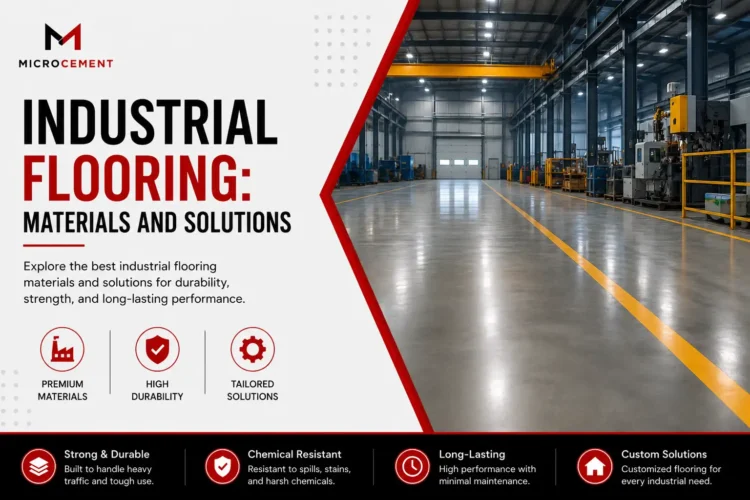
Industrial flooring refers to durable, high performance floor systems designed to handle heavy traffic, chemical exposure, and constant wear in commercial and industrial spaces. Epoxy, vinyl, resinous concrete coatings, and microcement each offer different advantages depending on the facility, budget, and look a business wants to achieve.
This guide compares the leading industrial and commercial flooring materials, explains what drives cost and performance, and helps Plano and Dallas facility owners choose the right system for 2026. You will also learn where modern decorative options like microcement fit into industrial and commercial spaces.
What Is Industrial Flooring?
Industrial flooring is a category of floor systems built to withstand heavy foot and equipment traffic, chemical spills, and constant cleaning without breaking down. These floors typically use materials like epoxy resin, polyurethane coatings, or reinforced concrete rather than standard residential flooring products. Facility managers researching options often start with what microcement is to understand how newer seamless coatings compare to traditional industrial materials like epoxy.
Industrial flooring differs from commercial flooring mainly in performance demands. A retail showroom needs durability and appearance, while a manufacturing floor needs chemical resistance and impact strength above almost everything else.
Why Does Choosing the Right Industrial Flooring Matter?
Choosing the right industrial flooring matters because the wrong material fails faster under heavy use, leading to costly repairs and facility downtime.
A floor that cracks or delaminates under chemical exposure creates both safety hazards and maintenance headaches. Reviewing how micro concrete flooring performs under heavy use helps facility owners compare it against traditional epoxy and vinyl systems before making a decision.
In Plano and Dallas, facilities also deal with seasonal temperature swings and humidity that can affect how certain flooring materials expand, contract, or hold up over time.
Comparing the Main Types of Industrial and Commercial Flooring
Each major flooring type offers a different balance of durability, cost, and appearance.
| Material | Best For | Durability | Look |
| Epoxy flooring | Warehouses, factories, garages | High, chemical resistant | Glossy, industrial |
| Vinyl flooring | Offices, retail, kitchens | Moderate to high | Wide style range |
| Resinous concrete coatings | Heavy industrial, manufacturing | Very high, impact resistant | Utilitarian |
| Microcement | Showrooms, offices, mixed use spaces | High, seamless surface | Modern, decorative |
Businesses that want durability without sacrificing appearance often lean toward microcement flooring for showrooms, offices, and mixed use commercial spaces where standard industrial finishes feel too utilitarian.
Benefits of Modern Industrial Flooring Solutions
Modern flooring systems offer advantages beyond basic durability that older materials often cannot match.
● Seamless surfaces that reduce dirt buildup and bacteria growth
● Chemical and abrasion resistance for demanding environments
● Non-slip and slip-resistant options for safety compliance
● Faster installation timelines compared to full tile or concrete replacement
● A wide range of finishes, from industrial gloss to decorative matte textures
● Lower long term maintenance costs through durable, easy to clean surfaces
These benefits matter most when a facility needs to balance heavy use with a professional appearance for clients or visitors.
Common Mistakes When Choosing Industrial Flooring
The most common mistake is choosing a flooring material based on price alone without considering the specific demands of the space.
Another mistake is ignoring surface preparation. Flooring performance depends heavily on proper substrate prep, and according to general principles of flooring as a building material category, even high quality coatings fail prematurely when applied over an improperly prepared concrete slab.
Some facility owners also underestimate maintenance requirements. Certain industrial coatings need periodic resealing or recoating, which should factor into the total cost of ownership from the start.
Cost Factors for Industrial and Commercial Flooring
Industrial flooring cost depends on material type, square footage, surface preparation needs, and whether the existing floor needs repair before installation.
Epoxy systems generally cost less upfront than seamless decorative coatings, while microcement often costs more per square foot but delivers a distinct finished look. Reviewing microcement flooring cost in Dallas gives Plano and Dallas facility owners a clearer budget comparison against traditional epoxy pricing.
How to Choose the Right Flooring for Your Facility
Choose your flooring material based on foot traffic, chemical exposure, and how much the appearance of the space matters to your business.
For spaces transitioning from old tile or worn concrete, reviewing microcement over tile installation shows how a modern coating can update a space without a full demolition.
Facility owners comparing options often check community discussions for real world input, such as this industrial flooring thread where business owners share what worked for their specific spaces.
Microcement serves Plano and Dallas businesses looking for a durable, seamless flooring solution that combines the performance of industrial materials with a modern, decorative finish.
Frequently Asked Questions
What is the most durable industrial flooring option?
Resinous concrete coatings and epoxy flooring are among the most durable options for heavy industrial use, offering strong chemical and impact resistance. The best choice depends on the specific demands of your facility.
Is microcement suitable for commercial or industrial spaces?
Yes, microcement suits offices, showrooms, and retail spaces that need durability and a modern, seamless finish.
How much does industrial flooring cost per square foot?
Cost varies widely by material, ranging from budget friendly epoxy coatings to higher end decorative finishes like microcement. Getting a quote based on your specific square footage and surface condition gives the most accurate number.
How long does industrial flooring installation take?
Installation time varies by material and area, from a few days for epoxy to longer for prep-intensive microcement applications.
Does industrial flooring require special maintenance?
Most industrial flooring systems need regular cleaning and occasional resealing to maintain performance. Maintenance needs vary by material, so it is worth confirming care requirements before installation.
Can industrial flooring be installed over existing tile or concrete?
In many cases, yes. Microcement can go directly over existing tile or concrete, reducing demolition time and project costs.
Conclusion
Choose industrial flooring based on your facility’s needs, including chemical resistance, heavy-traffic durability, and a modern finish. Plano and Dallas facility owners have more options in 2026 than ever, including seamless solutions like microcement. Contact Microscement to discuss the right flooring solution for your commercial or industrial space.