

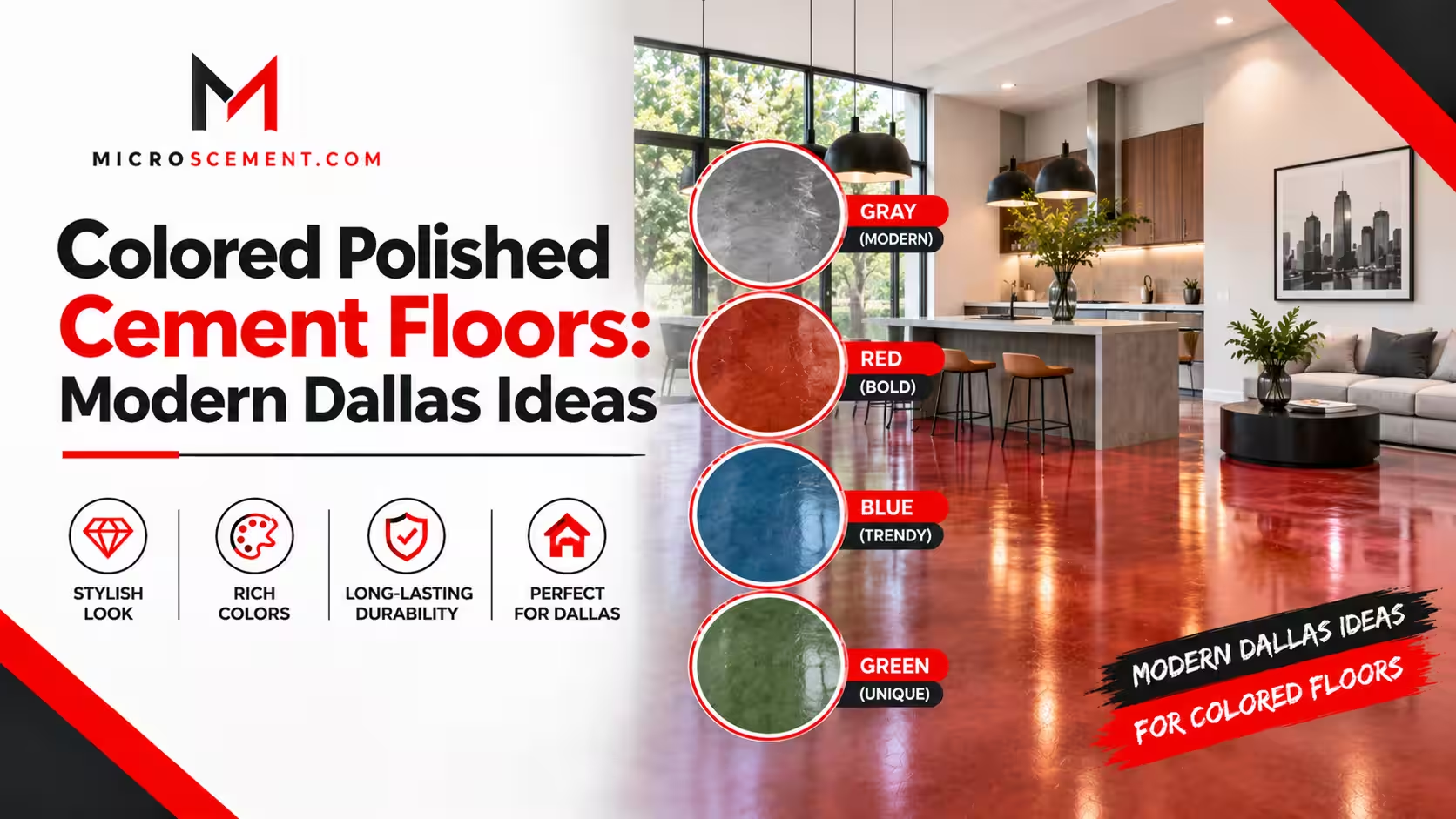
Colored polished cement floors are concrete slabs that are tinted, ground smooth, and sealed to a satin or glossy shine. They cost roughly $6 to $15 per square foot in Dallas, depending on color method, slab condition, and gloss level. This guide covers colors, methods, costs, care, and when a thinner option like microcement is the better fit for Dallas and Plano homes.
What Are Colored Polished Cement Floors?
Colored polished cement floors are cement-based floors that get their color from pigments, stains, or dyes and their shine from diamond grinding. The result is a seamless, hard surface with a smooth finish.
Contractors may call them polished concrete, decorative concrete flooring, or colored cement flooring. The terms overlap heavily.
How Are Colored Polished Concrete Floors Made?
Crews color the slab, then grind and polish it in stages. Here is the typical process:
- Inspect the slab for cracks, moisture, and old coatings.
- Grind the surface with coarse diamond grinding discs.
- Apply color using integral pigment, acid stain, water-based stain, or concrete dye.
- Apply a lithium silicate or sodium silicate densifier.
- Polish with finer diamond abrasive pads until the shine you want.
- Seal with a concrete sealer for stain protection.
Each step affects the final color. Skipping the densifier leaves the floor softer and dustier.
How Do You Color Polished Concrete?
You can color concrete in four main ways. Each gives a different look.
Integral Concrete Coloring
Iron oxide pigments are mixed into new concrete. The color runs through the slab, so it resists fading and chipping. This only works on new pours.
Acid Staining
Reactive stains chemically react with the cement. They create earthy, cloudy tones in browns, tans, and blue-greens. Results vary slab to slab, which many owners like.
Water-Based Stains and Dyes
Non-reactive stains and concrete dyes offer brighter, more predictable colors. Dyes can produce vibrant reds, blues, and blacks that acid stains cannot.
Dry-Shake Color Hardener
Crews sprinkle color hardener on fresh concrete. It adds color and surface strength. It is more common in stamped work than in polished floors.
What Colors Work Best for Modern Interiors?
Gray, white, charcoal, and warm tan work best for modern homes because they pair with almost any décor. Choose by room and light.
- Light gray and white: brighten small rooms and open layouts
- Dark gray and charcoal: create an industrial or minimalist mood
- Warm tan and brown: add a cozy, rustic feel
- Bold blues and greens: work as accents in studios and showrooms
Test samples in your own lighting. Dallas homes get strong afternoon sun, which can shift how colors look.
How Much Do Colored Polished Cement Floors Cost?
Expect about $6 to $15 per square foot installed in Dallas. Metallic and multi-color designs cost more. These are planning ranges, not quotes. Get written estimates before you decide.
| Cost Factor | Effect on Price |
| Slab condition | Cracks and old glue add prep labor |
| Color method | Dyes and metallic finishes cost more |
| Gloss level | Higher gloss needs more polishing steps |
| Room size | Larger rooms lower the per-foot price |
| Sealer type | Premium sealers cost more |
Ask for repair, restoration, and sealing as separate line items.
What Are the Benefits of Colored Polished Concrete?
The biggest benefits are durability, easy cleaning, and a seamless modern look. Other advantages include:
- Abrasion resistance: handles busy households and retail traffic
- Low maintenance: no grout lines to scrub
- Reflectivity: bounces light and brightens rooms
- Customization: many colors, finishes, and borders
- Long life: often decades with proper care
The surface works in living rooms, kitchens, offices, showrooms, and warehouses.
What Are the Disadvantages?
Polished concrete can crack, feel cold, and turn slippery when wet. Plan for these issues before you start.
- Cracking: Dallas clay soil shifts, and slabs can move
- Hardness: dropped glass breaks easily
- Slipperiness: high gloss needs a slip-resistant finish
- Color variation: acid stains never look identical twice
- Repair difficulty: matching old color is hard
Control joints help guide cracks. A satin or matte finish improves grip.
Can You Color and Polish Existing Concrete Floors?
Yes, if the slab is sound and has enough surface to grind. A contractor tests the concrete first. Older slabs may need grinding, patching, or an overlay.
Some slabs cannot be polished well. Thin toppings, heavy stains, and uneven pours may need a different solution. You can read more about how polished concrete is made and finished on Wikipedia.
How Do You Maintain Colored Polished Concrete Floors?
Sweep daily, mop with a pH-neutral cleaner, and reseal as the surface dulls. Avoid acidic cleaners and harsh scrubbers.
- Use felt pads under furniture
- Wipe spills quickly
- Re-polish or refresh sealer every few years
- Fill small cracks early
Faded floors can often be restored by re-polishing and resealing. Concrete floor restoration costs less than replacement.
Colored Concrete vs. Epoxy vs. Microcement
Polished concrete is hard and durable, epoxy is a coating, and microcement is a thin seamless overlay. The right pick depends on your slab and style.
| Feature | Polished Concrete | Epoxy | Microcement |
| Needs sound slab | Yes | Yes | No, works over many surfaces |
| Look | Glossy, natural | Glossy, colored | Matte, seamless |
| Best for | Slabs, commercial | Garages, utility | Floors, walls, bathrooms |
| Repair | Re-polish | Recoat | Spot reapply |
Microscement installs microcement where polishing is not practical, such as over tile or on walls. Our microcement flooring guide compares cost and benefits. If you prefer a patterned look instead, see our stamped concrete floors guide.
How Do You Choose the Right Floor and Contractor?
Pick the floor that fits your slab, budget, and style, then hire a contractor with proven interior experience. Ask these questions:
- Can I see photos of finished indoor projects?
- Does the quote include grinding, color, densifier, and sealer?
- How do you handle cracks and moisture?
- What warranty do you offer?
Many homeowners also read Quora discussions about colored polished concrete floors before choosing. Treat them as opinions and confirm details with local pros.
Frequently Asked Questions
Are colored polished concrete floors durable?
Yes. Polished concrete resists abrasion, stains, and heavy traffic when densified and sealed. Colored floors last decades with proper care. Cracks and sealer wear are the main risks, and both are easy to manage with regular maintenance.
How much do colored polished cement floors cost?
Most Dallas projects cost about $6 to $15 per square foot installed. Dye, metallic finishes, and slab repair raise the price. Sealing and crack repair may cost extra. Request written quotes from several contractors to compare.
Do colored polished concrete floors fade?
Integral color rarely fades because it runs through the slab. Stains and dyes can fade in strong sunlight over time. A UV-stable sealer helps. Re-polishing and resealing can refresh dull or faded floors.
Are colored polished concrete floors slippery?
They can be when wet, especially at high gloss. Satin or matte finishes improve grip. Contractors can add slip-resistant additives to the sealer. Use mats in entryways, kitchens, and bathrooms.
Can existing concrete floors be colored and polished?
Often yes. The slab must be sound, clean, and thick enough to grind. A contractor tests for cracks, moisture, and old coatings first. Damaged slabs may need an overlay or a microcement finish instead.
Is colored polished concrete cheaper than tile?
Often yes, compared with premium porcelain or natural stone. Basic ceramic tile can cost less. Polished concrete saves money on grout upkeep and gives a seamless look.
Conclusion
Colored polished cement floors offer a durable, seamless, and modern look when you choose the right color method and sealer. Plan about $6 to $15 per square foot in Dallas and Plano, and compare detailed quotes. For floors that cannot be polished, contact Microscement for a free consultation about microcement flooring costs in Dallas.